The training that a Balinese artist like I Made Kara undergoes is not structured in the way Western art education is. There is no formal curriculum, no critique structure, no graduation. Instead, learning happens through proximity — sitting with a master, watching, occasionally being guided in a specific technique, and gradually absorbing both the technical vocabulary and the spiritual framework that gives that vocabulary meaning. This apprenticeship model produces artists whose knowledge is embodied rather than intellectual, which accounts for the particular quality of presence that distinguishes the finest Balinese work from technically accomplished but spiritually inert imitation.
I Made Kara’s range as a Balinese artist extends across media and forms in a way that reflects the generalist nature of traditional Balinese artistic practice. Specialisation in a single medium or form is a relatively modern development, driven in part by market demand from collectors and galleries who prefer an identifiable signature style. Traditional Balinese artists moved between painting, carving, mask-making, and ceremonial object production as the community’s needs required. I Made Kara maintains this broader practice, and it shows in the confidence with which he moves between different forms — each one informed by the depth he has developed in the others.
For visitors to Bali who want to understand what makes a genuinely skilled Balinese artist different from the work available in tourist shops and gallery chains, spending time with an artist like I Made Kara is the most direct path. The conversation that happens in and around the studio — about the origins of a particular design, the requirements of a ceremony the piece is being made for, the way a specific technique was learned — provides a context that transforms the experience of looking at the finished work. The objects made by a Balinese artist working in this tradition are not decorative items; they are documents of a living culture, made by someone whose identity is inseparable from the tradition that shaped it.
I Made Kara: A Balinese Artist Rooted in Tradition
What distinguishes I Made Kara as a Balinese artist is the depth of his engagement with the spiritual dimension of his practice. Where Western art traditions often separate aesthetic from spiritual purpose, a Balinese artist like I Made Kara works within a framework where the two are inseparable. The preparation for a mask, a painting, or a ceremonial object is as much spiritual discipline as it is technical skill — requiring the artist to be in an appropriate state of intention, purity, and connection before the work begins. This is not performance or affectation; it is the actual practice, passed down through generations, that produces the quality of presence visible in the finest examples of Balinese art.
For visitors to Bali who encounter the work of a Balinese artist like I Made Kara — whether in a gallery, a temple context, or a working studio — the experience rewards slow attention. These are not works designed for quick appreciation. The more time you give them, the more detail, intention, and meaning becomes visible. This is the particular gift of Balinese artistic tradition: works that grow in depth the longer you stay with them.

I Made Kara is a Balinese artist whose work illuminates why the concept of the artist barely exists as a separate category in Balinese culture. The term art or artist in Balinese society is almost never heard of, because art and being artistic has become a part of everyday life. Art is inseparable from the customs, mythology, and philosophy that live in Balinese society. However, the collective mind of society is open and accepting to new values and modernization, combining modern changes the classical arts and traditions.
From the moment I met I Made Kara, he drew me into a deep story with details of characters and figures in myth and legend that I had learnt about when I was a school girl. I have never known that Gajahmada or Jirnnodhara, the legendary prime minister of Majapahit, was not only an expert in war strategy but also shrewd and cunning. Or, that Rangda, the black widow in Balinese myth, was dearly missed by her ex who was a king and cast a spell on her and threw her away from the palace to the cemetery. Upon realizing his mistake, the king was desperate to be reunited with her.
I Made Kara is a Sangging, a wooden masks craftsperson and also a painter. He is running the “House of Mask”, a workshop here in Sanur where people can come to learn how to craft a mask using traditional tools and entire process is done by hand. A sangging must also master and understand all things spiritual to be able to visualize the character in his work.


Balinese masks are made of wood, usually ylang (Cananga odorata) and pule (Alstonia scholaris). What struck me was that the final result of the mask was as precise as if it was machine-made. It takes approximately 35 days to turn a log of wood into a final mask with individual and unique character, accessories and colour.
I Made Kara, as an artist, is committed to giving a mask-making course to school students as a “ngayah” which essentially manifests his sense of devotion to God in the form of serving community.
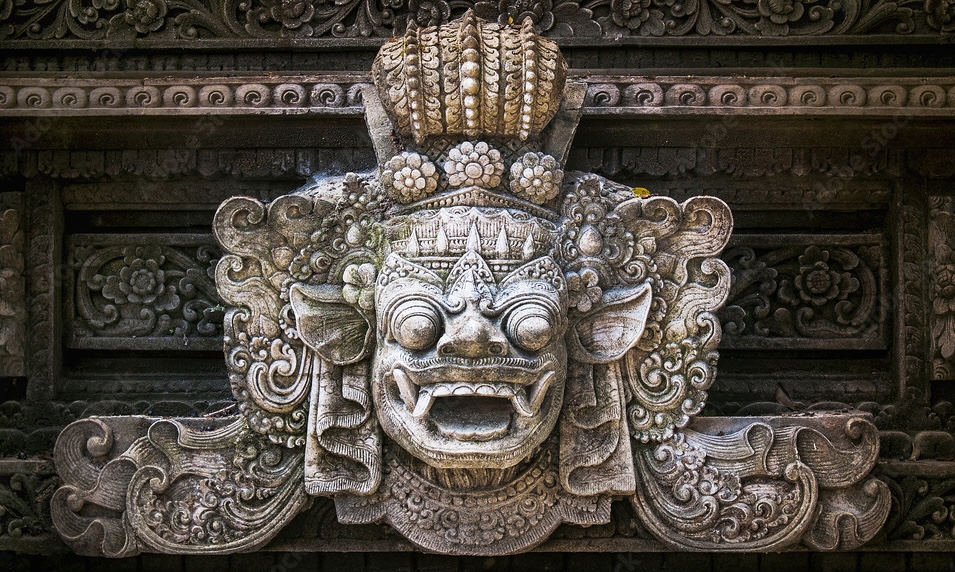
Balinese masks are a tradition and work of art that need to be preserved. Masks are used in many rituals and ceremonies such as those to repel negative energy (bad luck), calling down the rain, and curing or repelling diseases. On the surface, they are entertainment but they have a deeper significance culturally.
The main function of masks in Balinese culture is to show the identity and character in a performance; instead of wearing makeup, dancers wear masks in their performances.
In the process of sculpting the mask, I Made Kara begins with meditation, calling for some spiritual intelligence, and when the dancer finally puts on the mask, it’s as if the mask shows this spiritual connection in the expression, being soulful and alive. I Made Kara’s work as a Balinese artist is a living demonstration of this truth. Learn more about Balinese arts on Wikipedia and explore our guide to art and culture tours in Bali.