var wpbm_global1 = {"wpbm_ajaxurl":"https://the-travellist.com/wp-admin/admin-ajax.php","wpbm_plugin_url":"https://the-travellist.com/wp-content/plugins/booking-manager","wpbm_today":"[2026,11,13,11,35]","wpbm_plugin_filename":"index.php","message_verif_requred":"This field is required","message_verif_requred_for_check_box":"This checkbox must be checked","message_verif_requred_for_radio_box":"At least one option must be selected","message_verif_emeil":"Incorrect email address","message_verif_same_emeil":"Your emails do not match","wpbm_active_locale":"en_US","wpbm_message_processing":"Processing","wpbm_message_deleting":"Deleting","wpbm_message_updating":"Updating","wpbm_message_saving":"Saving"};
//# sourceURL=wpbm-global-vars-js-extra
function loadScript(a){var b=document.getElementsByTagName("head")[0],c=document.createElement("script");c.type="text/javascript",c.src="https://tracker.metricool.com/resources/be.js",c.onreadystatechange=a,c.onload=a,b.appendChild(c)}loadScript(function(){beTracker.t({hash:"77d6b1dab2de87fade951e8435e57335"})});
Lumbung in Bali: Traditional Design Meets Modern Island Living
Written by
The Travellist
Bali is known for its distinctive architecture, from intricately carved stone gates and traditional family compounds to open-air living areas surrounded by tropical gardens. Among its many architectural features is the lumbung, a traditional rice barn that has become an inspiration for modern tropical design.
Originally built for storing harvested rice, the lumbung Bali has a recognisable structure, often featuring an elevated storage area, a steeply pitched roof and natural materials. Today, elements of this traditional design can be found in villas, resorts and boutique accommodation across Bali, where local architectural influences are combined with the comforts of contemporary living.
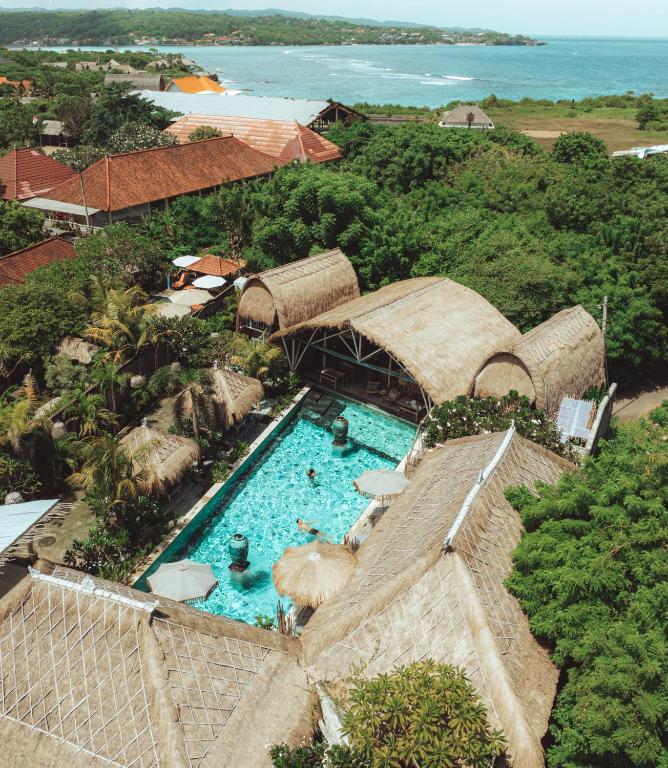
One example can be found at Laguna Biru in Nusa Lembongan, where lumbung-style rooms bring a touch of traditional Indonesian architecture into a relaxed island setting.
What Is a Lumbung?
A lumbung is a traditional Indonesian rice barn used by farming communities to store harvested rice. In Bali, these structures have long been part of the agricultural landscape, reflecting the importance of rice cultivation in local life and culture.
Traditional lumbung buildings are commonly recognised by their raised construction and distinctive roof shape. Elevating the storage area helps protect the harvest from moisture, pests and other potential damage. The roof is often designed with a generous overhang, providing protection from the tropical weather.
While the exact construction and appearance can vary between regions, the lumbung remains an interesting example of how traditional buildings developed in response to practical everyday needs.
Laguna Biru in NusaLembongan
The Distinctive Features of Lumbung Architecture
Several elements give lumbung buildings their recognisable appearance and make them appealing in modern architectural design.
1. Elevated Structure
One of the most distinctive characteristics is the raised structure. Traditionally, the elevated storage area helped protect rice from ground moisture and pests.
In contemporary accommodation, elevated or raised elements can also create an interesting architectural profile and help distinguish different areas of a building.
2. Traditional Roof Design
The steeply pitched roof is another defining feature of the lumbung. Its shape helps rainwater run off while providing shade and protection from the sun.
The roof often becomes the most noticeable part of the building, giving lumbung-inspired structures their distinctive silhouette.
3. Natural Materials
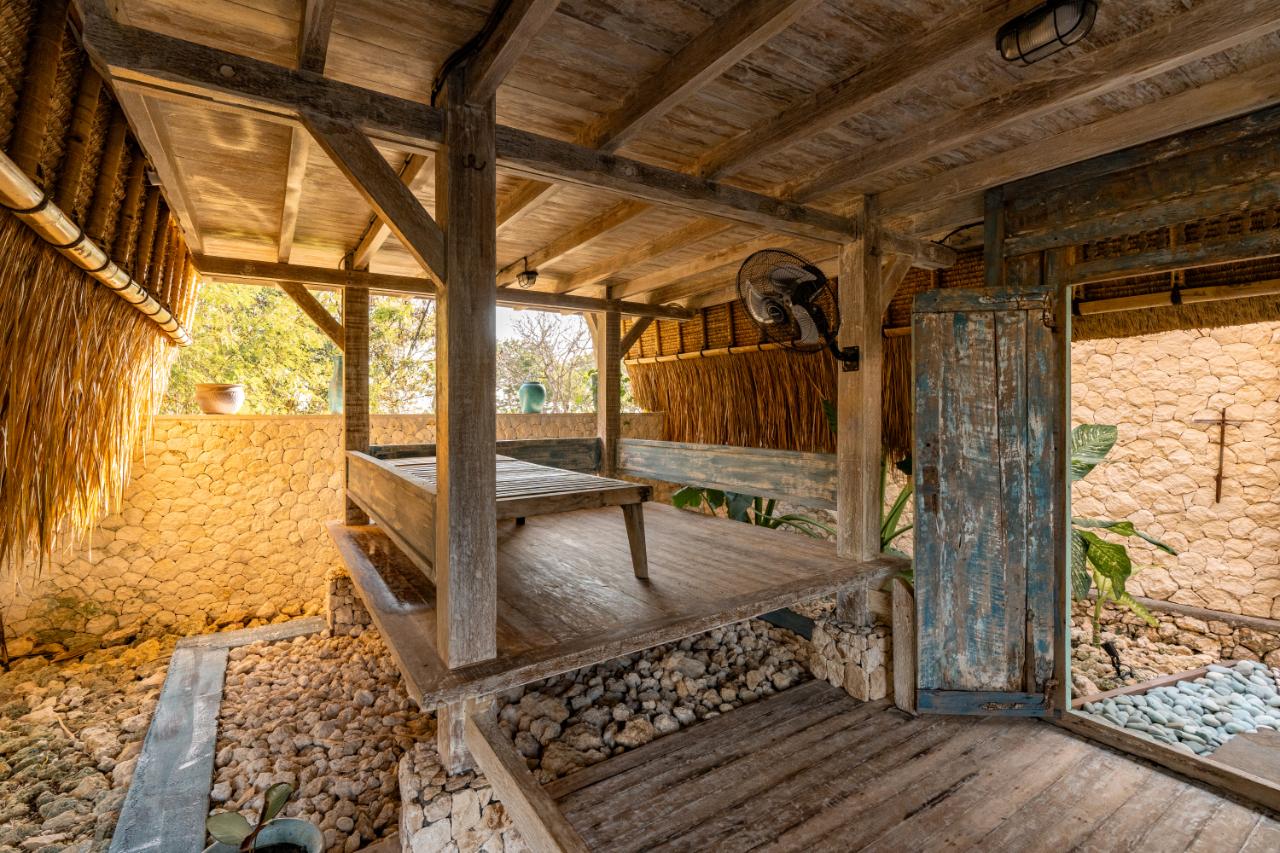
Traditional structures make use of locally available materials, which may include timber, bamboo and thatched roofing. These materials connect the building to its surroundings and give it a natural appearance.
Modern interpretations may combine traditional materials with contemporary construction methods, creating a balance between local character and present-day comfort.
4. A Design Shaped by the Tropical Climate
Traditional architecture in Bali has developed in response to the island’s tropical conditions. Roof overhangs, shaded areas and thoughtful building arrangements can help provide protection from strong sunlight and heavy rain.
These principles continue to influence modern tropical architecture, where comfort, ventilation and the relationship between indoor and outdoor areas are important considerations.
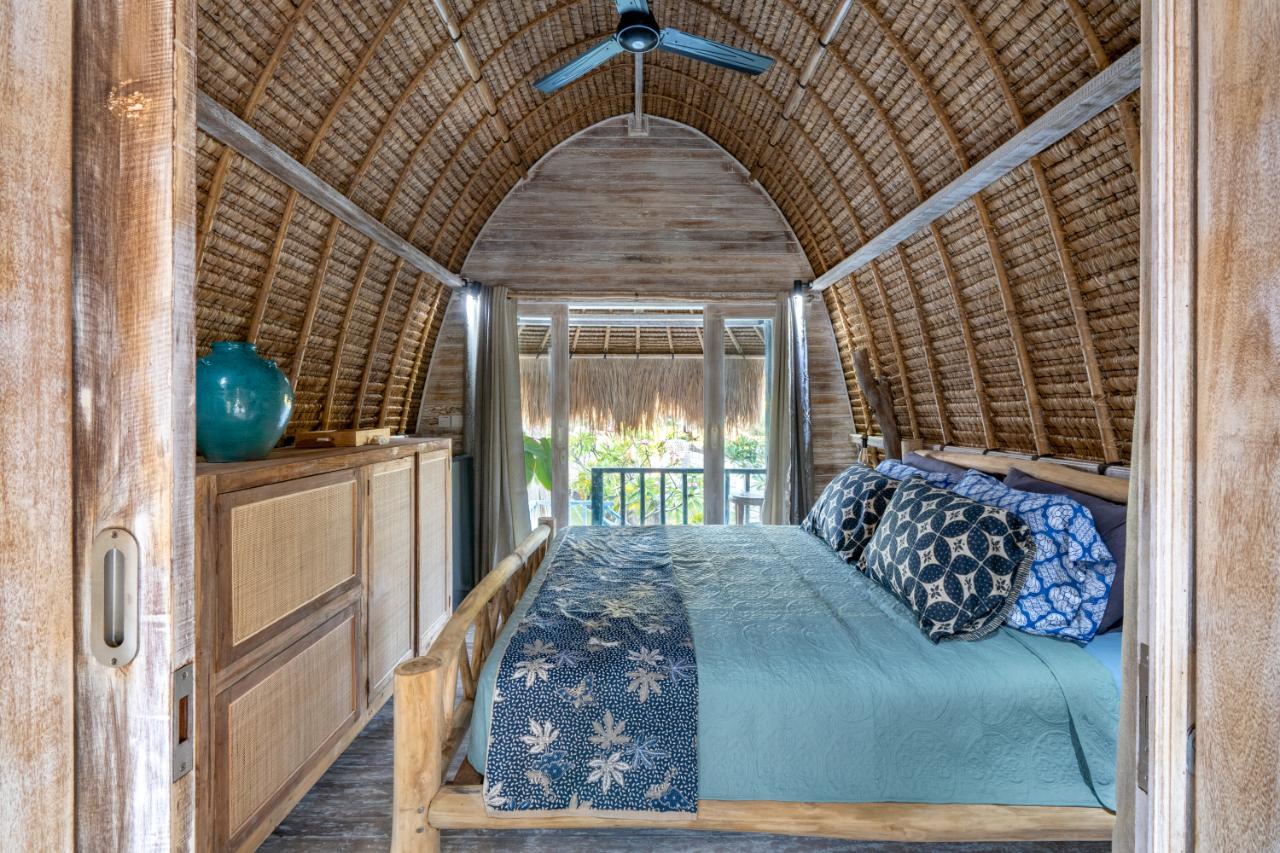
Laguna Biru – LumbungBedroom
How Traditional Lumbung Design Inspires Modern Accommodation
Traditional architecture does not have to remain limited to historic buildings. Across Bali and the surrounding islands, designers continue to reinterpret local architectural features in ways that suit modern lifestyles.
Rather than reproducing an old rice barn exactly, contemporary designs may borrow its roof shape, natural materials or overall form. These elements can then be combined with modern bathrooms, comfortable bedding and other facilities expected by today’s travellers.
This approach allows accommodation to have a stronger connection to Indonesian architectural traditions while still providing the comforts of a holiday stay.
The wider architectural conversation in Bali also involves finding a balance between cultural identity, environmental considerations and modern construction. As highlighted in an article by Liputan6 featuring Lumbung Architect, local architectural practices increasingly consider traditional influences alongside tropical conditions, sustainable materials and local planning regulations.
Experiencing Lumbung-Style Accommodation at Laguna Biru
For travellers interested in seeing how traditional design can be incorporated into modern accommodation, Laguna Biru in Nusa Lembongan offers an example worth discovering.
This boutique resort features five individual rooms, including two lumbung-style rooms, alongside a Master Suite and two additional Suites. The lumbung rooms bring a distinctive architectural character to the property, adding to its relaxed island atmosphere.
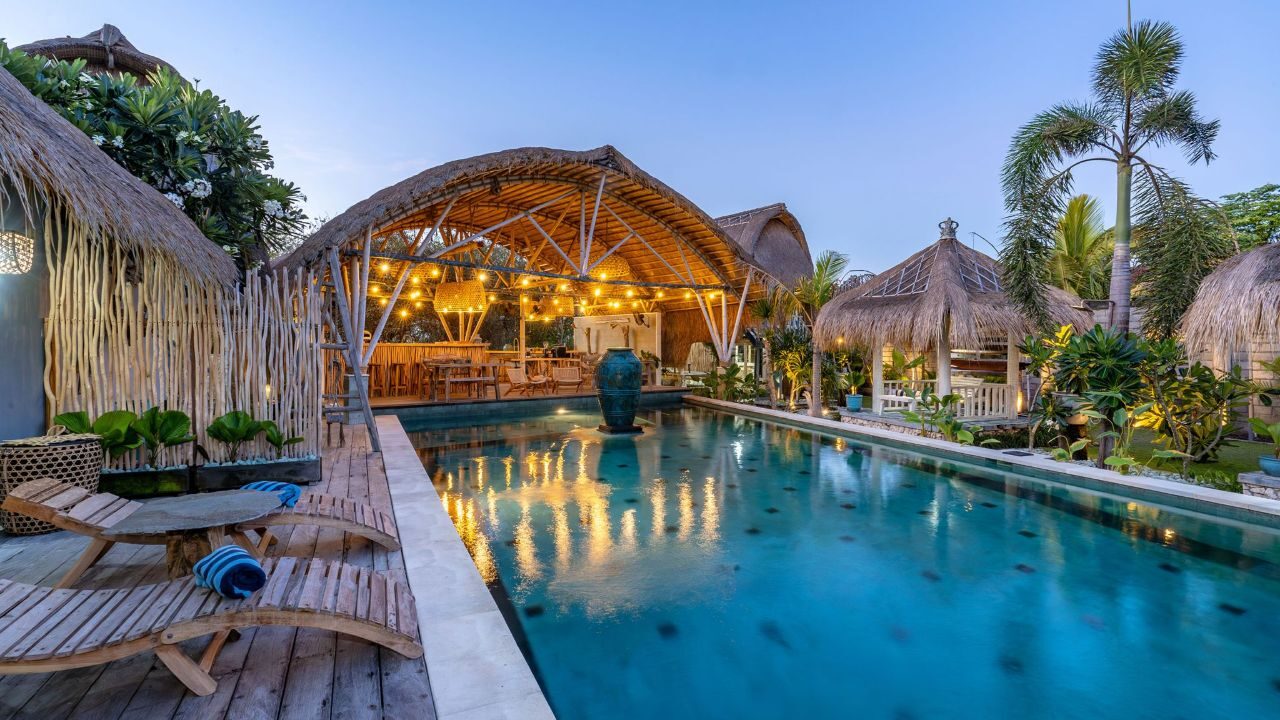
The resort combines its traditional-inspired accommodation with a 20-metre swimming pool and an on-site restaurant. Daily breakfast is included with all bookings, making it a convenient choice for guests looking to enjoy their island stay.
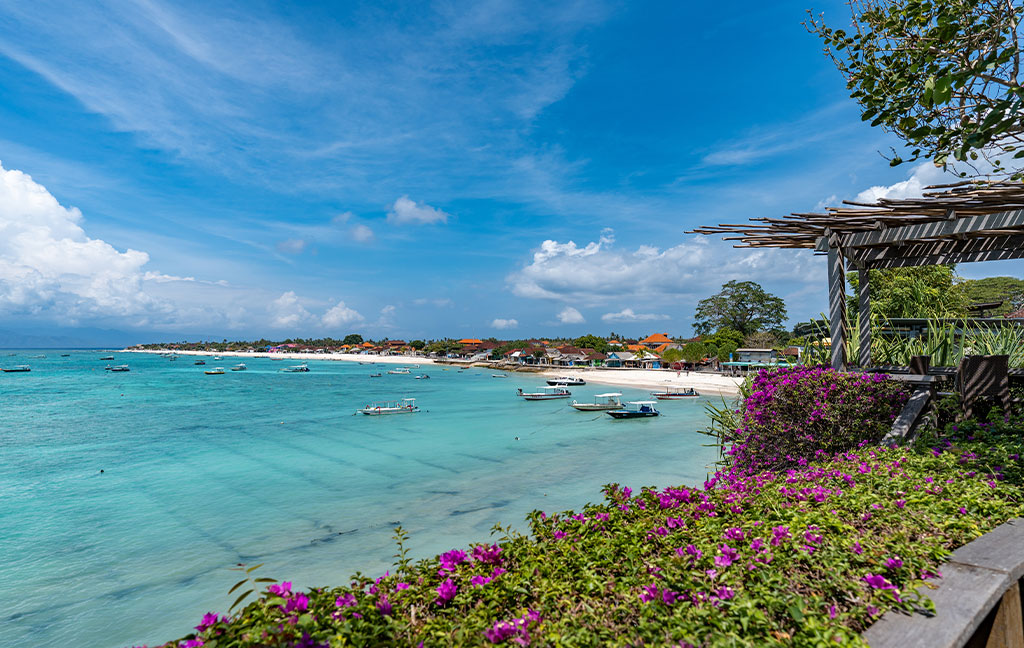
Laguna Biru is also within a short stroll of some of Nusa Lembongan’s well-known coastal attractions, including Dream Beach, Devil’s Tears and Sandy Bay.
For those who appreciate accommodation with a little more character, the lumbung-style rooms offer an opportunity to experience a traditional architectural influence in a contemporary island setting.
Preserving Traditional Design While Looking to the Future
Architecture is an important part of Bali’s cultural identity. Traditional structures such as the lumbung show how buildings can reflect local lifestyles, available materials and the natural environment.
As Bali continues to develop, incorporating these influences into modern architecture offers a way to celebrate the island’s heritage while responding to the needs of contemporary living.
For visitors, staying in accommodation inspired by traditional Indonesian design can also add another dimension to a holiday. Beyond the beaches and scenery, it offers a small insight into the architectural character that makes Bali and its neighbouring islands so distinctive.
If you’re planning a visit to Nusa Lembongan, Laguna Biru is one place where you can experience this traditional-inspired design for yourself.
Planning a stay in Nusa Lembongan? Get in touch with The Travellist team to discover accommodation options for your next island getaway.
<< If you liked this article, you may also like our other articles >> To chat with our marketing partner about your business, please contact The Travellist
window.maspikGuardConfig = {"honeypot":true,"honeypotName":"full-name-maspik-hp","honeypotLabel":"Leave this field empty","advancedKey":true,"keyName":"maspik_spam_key","keyValue":"pUoDQrdRACqDR6uCLikaghWVQswqp9OuNEIKXYrWWBg8ZzxuVgpekzV0ikVD7NUo","atomicHpId":"maspik_atomic_hp","atomicKeyId":"maspik_atomic_sk","atomicSignalsId":"maspik_atomic_sg","signals":true,"signalsName":"maspik_signals","signalsVersion":1,"signalsProbes":false,"skipSelector":""};
//# sourceURL=maspik-guard-js-before
var elementorFrontendConfig = {"environmentMode":{"edit":false,"wpPreview":false,"isScriptDebug":false},"i18n":{"shareOnFacebook":"Share on Facebook","shareOnX":"Share on X","pinIt":"Pin it","download":"Download","downloadImage":"Download image","fullscreen":"Fullscreen","zoom":"Zoom","share":"Share","playVideo":"Play Video","previous":"Previous","next":"Next","close":"Close","a11yCarouselPrevSlideMessage":"Previous slide","a11yCarouselNextSlideMessage":"Next slide","a11yCarouselFirstSlideMessage":"This is the first slide","a11yCarouselLastSlideMessage":"This is the last slide","a11yCarouselPaginationBulletMessage":"Go to slide"},"is_rtl":false,"breakpoints":{"xs":0,"sm":480,"md":768,"lg":1025,"xl":1440,"xxl":1600},"responsive":{"breakpoints":{"mobile":{"label":"Mobile Portrait","value":767,"default_value":767,"direction":"max","is_enabled":true},"mobile_extra":{"label":"Mobile Landscape","value":880,"default_value":880,"direction":"max","is_enabled":false},"tablet":{"label":"Tablet Portrait","value":1024,"default_value":1024,"direction":"max","is_enabled":true},"tablet_extra":{"label":"Tablet Landscape","value":1200,"default_value":1200,"direction":"max","is_enabled":false},"laptop":{"label":"Laptop","value":1366,"default_value":1366,"direction":"max","is_enabled":false},"widescreen":{"label":"Widescreen","value":2400,"default_value":2400,"direction":"min","is_enabled":false}},"hasCustomBreakpoints":false},"version":"4.3.6","is_static":false,"experimentalFeatures":{"additional_custom_breakpoints":true,"container":true,"theme_builder_v2":true,"hello-theme-header-footer":true,"nested-elements":true,"import-export-customization":true,"e_pro_atomic_form":true,"e_pro_collection_loop":true},"urls":{"assets":"https:\/\/the-travellist.com\/wp-content\/plugins\/elementor\/assets\/","ajaxurl":"https:\/\/the-travellist.com\/wp-admin\/admin-ajax.php","uploadUrl":"https:\/\/the-travellist.com\/wp-content\/uploads"},"nonces":{"floatingButtonsClickTracking":"407f942b4a","atomicFormsSendForm":"49457e707e"},"swiperClass":"swiper","settings":{"page":[],"editorPreferences":[]},"kit":{"body_background_background":"classic","active_breakpoints":["viewport_mobile","viewport_tablet"],"global_image_lightbox":"yes","lightbox_enable_counter":"yes","lightbox_enable_fullscreen":"yes","lightbox_enable_zoom":"yes","lightbox_enable_share":"yes","lightbox_title_src":"title","lightbox_description_src":"description","hello_header_logo_type":"logo","hello_header_menu_layout":"horizontal","hello_footer_logo_type":"logo"},"post":{"id":13658,"title":"Lumbung%20Bali%3A%20Traditional%20Design%20Meets%20Modern%20Island%20Living%20-%20The%20Travellist","excerpt":"Discover the traditional lumbung Bali, from its agricultural origins and distinctive design to its influence on modern tropical villas and stays like Laguna Biru","featuredImage":"https:\/\/the-travellist.com\/wp-content\/uploads\/Laguna-Biru-1.jpg"}};
//# sourceURL=elementor-frontend-js-before
(function(){
"use strict";
function wpbc_init__head(){_wpbc.set_other_param( 'locale_active', 'en_US' ); _wpbc.set_other_param('time_gmt_arr', [2026,11,13,3,35] ); _wpbc.set_other_param('time_local_arr', [2026,11,13,11,35] ); _wpbc.set_other_param( 'today_arr', [2026,11,13,11,35] ); _wpbc.set_other_param( 'availability__unavailable_from_today', '0' ); _wpbc.set_other_param( 'url_plugin', 'https://the-travellist.com/wp-content/plugins/booking' ); _wpbc.set_other_param( 'this_page_booking_hash', '' ); _wpbc.set_other_param( 'calendars__on_this_page', [] ); _wpbc.set_other_param( 'calendars__first_day', '1' ); _wpbc.set_other_param( 'calendars__max_monthes_in_calendar', '2y' ); _wpbc.set_other_param( 'availability__week_days_unavailable', [999] ); _wpbc.set_other_param( 'calendars__days_select_mode', 'dynamic' ); _wpbc.set_other_param( 'calendars__fixed__days_num', 1 ); _wpbc.set_other_param( 'calendars__fixed__week_days__start', [-1] ); _wpbc.set_other_param( 'calendars__dynamic__days_min', 1 ); _wpbc.set_other_param( 'calendars__dynamic__days_max', 300 ); _wpbc.set_other_param( 'calendars__dynamic__days_specific', [] ); _wpbc.set_other_param( 'calendars__dynamic__week_days__start', [-1] ); _wpbc.set_other_param( 'calendars__days_selection__middle_days_opacity', '0.75' ); _wpbc.set_other_param( 'is_enabled_booking_recurrent_time', true ); _wpbc.set_other_param( 'is_allow_several_months_on_mobile', false ); _wpbc.set_other_param( 'is_enabled_change_over', false ); _wpbc.set_other_param( 'is_enabled_booking_timeslot_picker', true ); _wpbc.set_other_param( 'update', '12.0' ); _wpbc.set_other_param( 'version', 'biz_s' ); _wpbc.set_message( "message_check_no_selected_dates", "Please, select booking date(s) at Calendar." ); _wpbc.set_message( "message_range_selection_click_last_date", "Start date selected. Now click the last day of your booking to complete the date range." ); _wpbc.set_message( "message_range_selection_has_unavailable_dates", "The selected date range includes unavailable or already booked dates, so the selection was cleared. Please choose a range that contains only available dates." ); _wpbc.set_message( "message_dates_times_unavailable", "These dates and times in this calendar are already booked or unavailable." ); _wpbc.set_message( "message_choose_alternative_dates", "Please choose alternative date(s), times, or adjust the number of slots booked." ); _wpbc.set_message( "message_cannot_save_in_one_resource", "It is not possible to store this sequence of the dates into the one same resource." ); _wpbc.set_message( "message_check_required", "This field is required" ); _wpbc.set_message( "message_check_required_for_check_box", "This checkbox must be checked" ); _wpbc.set_message( "message_check_required_for_radio_box", "At least one option must be selected" ); _wpbc.set_message( "message_check_email", "Incorrect email address" ); _wpbc.set_message( "message_check_same_email", "Your emails do not match" ); _wpbc.set_message( "message_check_valid_date", "This field must be a valid date like {date_example}" ); _wpbc.set_message( "message_check_digits_only", "This field must contain only digits" ); _wpbc.set_message( "message_check_digits_count", "This field must contain {digits} digits" ); _wpbc.set_message( "message_error_start_time", "Start Time is invalid. The date or time may be booked, or already in the past! Please choose another date or time." ); _wpbc.set_message( "message_error_end_time", "End Time is invalid. The date or time may be booked, or already in the past. The End Time may also be earlier that the start time, if only 1 day was selected! Please choose another date or time." ); _wpbc.set_message( "message_error_range_time", "The time(s) may be booked, or already in the past!" ); _wpbc.set_message( "message_error_duration_time", "The time(s) may be booked, or already in the past!" ); _wpbc.set_message( "message_booking_saving", "Saving" ); _wpbc.set_message( "message_duplicate_booking_resource_on_page", "More than one calendar or booking form for Booking Resource ID {resource_id} is present on this page. A hidden copy still conflicts with the visible form and can prevent booking submission. The site administrator must keep only one calendar or form for this Booking Resource. After the page is corrected, reload it and try again." ); _wpbc.set_message( "message_booking_form_context_required", "This booking form is not connected to a valid calendar for Booking Resource ID {resource_id}. This can happen when the same Booking Resource is used more than once on the page, including in hidden content, or when the page cache is outdated. Reload the page and try again. If the problem continues, ask the site administrator to remove duplicate forms for this Booking Resource and clear the page cache." ); _wpbc.set_message( "message_booking_form_context_expired", "This booking form was generated by an older or cached version of the page for Booking Resource ID {resource_id}. Reload the page and try again. If the problem continues, ask the site administrator to clear the page cache and remove any duplicate calendar or form for this Booking Resource." ); _wpbc.set_message( "message_unexpected_server_response", "The server returned an unexpected response. Please reload the page and try again. If the problem continues, contact the website administrator." ); _wpbc.set_message( "message_http_conflict_cache_hint", "A cached or optimized version of this page may be outdated. Clear the browser cache and reload the page. Website administrators should also purge page, server, and CDN caches and regenerate minified or optimized files." ); _wpbc.set_message( "message_resource_selector_summary_label", "Booking Resource" ); _wpbc.set_message( "message_resource_selector_start_over", "Start over" ); _wpbc.set_message( "message_appointment_summary_label", "Your appointment" ); _wpbc.set_message( "message_appointment_start_over", "Start over" ); _wpbc.set_message( "message_captcha_incorrect", "The code you entered is incorrect" ); _wpbc.set_message( 'message_processing', "Processing" ); _wpbc.set_message( 'message_deleting', "Deleting" ); _wpbc.set_message( 'message_updating', "Updating" ); _wpbc.set_message( 'message_saving', "Saving" ); _wpbc.set_message( 'message_inline_preview_submission_disabled', "This is a request-local preview. Booking submission is disabled, and no booking will be created." ); _wpbc.set_message( 'message_error_check_in_out_time', "Error! Please reset your check-in\/check-out dates above." ); console.log( '== WPBC VARS 12.0 | 11.6.1 [biz_s] LOADED ==' );}
(function(){
if (window.__wpbc_boot_done__ === true) return;
var started = false;
function run_once(){
if (started || window.__wpbc_boot_done__ === true) return true;
started = true;
try { wpbc_init__head(); window.__wpbc_boot_done__ = true; }
catch(e){ started = false; try{console.error("WPBC init failed:", e);}catch(_){} }
return (window.__wpbc_boot_done__ === true);
}
function is_ready(){ return !!(window._wpbc && typeof window._wpbc.set_other_param === "function"); }
if ( is_ready() && run_once() ) return;
var waited = 0, max_ms = 10000, step = 50;
var timer = setInterval(function(){
if ( is_ready() && run_once() ) { clearInterval(timer); return; }
waited += step;
if ( waited >= max_ms ) {
clearInterval(timer);
// Switch to slow polling (1s) so we still init even without user interaction later.
var slow = setInterval(function(){ if ( is_ready() && run_once() ) clearInterval(slow); }, 1000);
try{console.warn("WPBC: _wpbc not detected within " + max_ms + "ms; using slow polling.");}catch(_){}
}
}, step);
var evs = ["wpbc-ready","wpbc:ready","wpbc_ready","wpbcReady"];
evs.forEach(function(name){
document.addEventListener(name, function onready(){ if (is_ready() && run_once()) document.removeEventListener(name, onready); });
});
if (document.readyState === "loading") {
document.addEventListener("DOMContentLoaded", function(){ if (is_ready()) run_once(); }, { once:true });
}
window.addEventListener("load", function(){ if (is_ready()) run_once(); }, { once:true });
window.addEventListener("pageshow", function(){ if (is_ready()) run_once(); }, { once:true });
document.addEventListener("visibilitychange", function(){ if (!document.hidden && is_ready()) run_once(); });
var ui = ["click","mousemove","touchstart","keydown","scroll"];
var ui_bailed = false;
function on_ui(){ if (ui_bailed) return; if (is_ready() && run_once()){ ui_bailed = true; ui.forEach(function(t){ document.removeEventListener(t, on_ui, true); }); } }
ui.forEach(function(t){ document.addEventListener(t, on_ui, true); });
})();
})();
//# sourceURL=wpbc_all-js-after
var wpbc_booking_appointment_config = {"ajax_url":"https://the-travellist.com/wp-admin/admin-ajax.php","action":"WPBC_AJX_BOOKING_APPOINTMENT_RESOLVE","validate_action":"WPBC_AJX_BOOKING_APPOINTMENT_VALIDATE_TIME","nonce":"ab1d92e116","error":"The Appointment form could not be loaded. Please try again.","validation_error":"This Appointment time could not be verified. Please try again.","initialization_error":"The Appointment form could not be initialized. Please start over and try again.","duplicate_provider":"This Provider already has an open Appointment form on this page. Complete or restart that Appointment before opening another form for the same Provider.","service_found":"Service found.","services_found":"Services found.","provider_found":"Provider found.","providers_found":"Providers found."};
//# sourceURL=wpbc-booking-appointment-js-extra
var wpbc_booking_resource_selector_config = {"ajax_url":"https://the-travellist.com/wp-admin/admin-ajax.php","action":"WPBC_AJX_BOOKING_RESOURCE_SELECTOR_RESOLVE","nonce":"bc081e021d","error":"The booking form could not be loaded. Please try again.","initialization_error":"The booking form could not be initialized. Please start over and try again.","duplicate_resource":"This Booking Resource already has an open booking form on this page. Complete or restart that booking before opening another form for the same resource.","resource_found":"Booking Resource found.","resources_found":"Booking Resources found."};
//# sourceURL=wpbc-booking-resource-selector-js-extra