The Symbolism of Food in Balinese Spiritual Life
The symbolism of food in Bali extends far beyond the plate. Where most culinary traditions use food as sustenance and occasionally as culture, Balinese tradition uses food as spiritual language — a vocabulary of offerings, ritual obligations, community bonds, and cosmological statements that no written text could fully replace. Understanding the symbolism of food in this context is not a specialist interest; it is fundamental to understanding why Bali’s culinary culture feels so distinctly alive compared to that of almost any other destination in Southeast Asia.
The symbolism of food also manifests in the careful observance of what is appropriate to eat, prepare, and offer at different points in the ceremonial calendar. Certain foods are only made for specific ceremonies; others are taboo on particular sacred days. A practitioner who knows the ceremonial calendar eats differently through the year — not from restriction but from a deep integration of food, time, and spiritual intention that is one of the most sophisticated expressions of the Balinese worldview. Explore our guide to Balinese ceremonies to understand the calendar that shapes these food traditions.
Balinese food holds deep cultural significance, where each dish often reflects the symbolism of food in Balinese rituals and everyday life. Traditional techniques like grilling, steaming, and deep-frying are used to enhance the complex flavors achieved by spices such as turmeric, ginger, lemongrass, and coriander. These ingredients are chosen not only for taste but also for their symbolic connections to health, prosperity, and spiritual harmony, making every meal in Bali a blend of rich flavors and cultural meaning.
Balinese food is also considered as a form of healing. Many traditional dishes are prepared with herbs and spices known for their therapeutic properties, and each ingredient has its unique purpose in improving overall health and well-being.

Therapeutic Properties of Balinese Spices
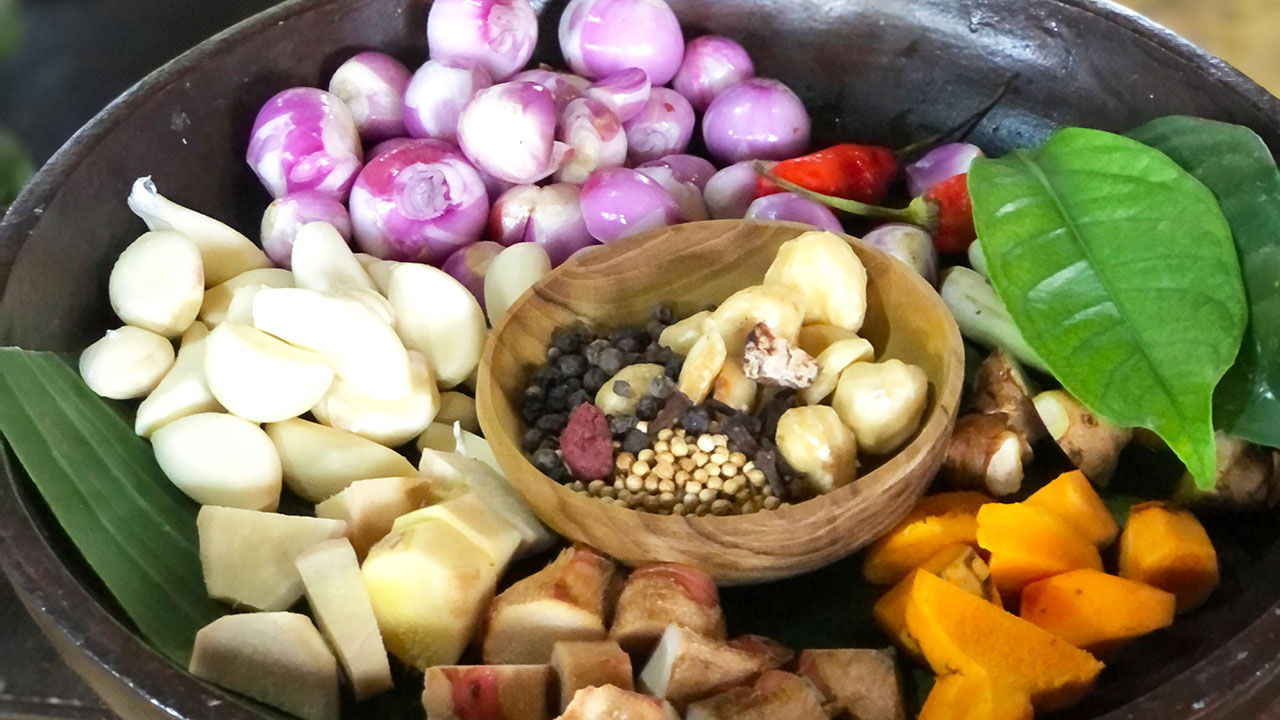
Kencur (also known as aromatic ginger), ginger, galangal, and turmeric are common ingredients in Balinese spice blends. Together, they create a complex and fragrant taste that is synonymous with the cuisine of Bali. Each of these spices has a unique flavour profile that contributes to the overall taste of the dish. Kencur has a warm, earthy flavor, while ginger has a zesty, slightly sweet taste. Galangal is aromatic and slightly bitter, while turmeric adds a bright, complex flavour and vibrant yellow color to the dish. When combined, these spices create a harmony of flavours that is unique to Balinese cuisine and is enjoyed by locals and visitors alike.
The spices are also used in traditional medicine and are believed to have healing properties. For example, ginger is an anti-inflammatory, which means it reduces swelling. Aromatic ginger (kencur) helps boost immunity, fight inflammation, improve digestion, while garlic is an all over medicine. Currently, garlic is most commonly promoted as a dietary supplement for conditions related to the heart and blood vessels, including high blood cholesterol and high blood pressure. And, many now believe that chili fires up metabolism, could kill germs, and is also thought to be good for blood circulation.
Traditional Drinks
As interesting as the food, there is a traditional herbal drink called loloh, made from various mixture of herbs and spices, including lemongrass, ginger, turmeric, tamarind, honey, and coconut water. It is believed to have medicinal properties and is often consumed for its health benefits. Loloh is commonly served in Bali’s temple ceremonies and is also sold by local street vendors.
Loloh cemcem is another kind of loloh made from cemcem leaves or commonly called wild kedondong, pounded or blended until crushed, filtered to get the juices. The leaf extract is then mixed again with water and the rujak seasoning which has been boiled. This drink has a unique taste, a collection of sour, salty, sweet, spicy, and also a little astringent.
Taste Balance
Chef Mudana believes in the taste balance – sweet, sour, salty, spicy and bitter – as it represents balance and harmony in life. Sweetness in food does not have to be always attained by adding sugar, but the usage of shallot can replace sugar.
Food and Offerings
The Balinese people have a unique tradition of offering food to God before consuming it. The offerings are made to show gratitude and respect to God for providing them with food. This simple offering is done by placing a small portion of each type of food that is being consumed on the tray or plate, or simply put aside on the edge of the serving plate. This tradition is not only practiced before meals at home, but also in restaurants and whereever else the Balinese travel. It is a beautiful and meaningful way to practice gratitude and mindfulness before eating.
The food philosophy in Bali focuses on the inter-connectivity between people, nature, and spirituality. By embracing local, seasonal ingredients and traditional cooking methods, Balinese cuisine seeks to promote harmony with the body, mind, and environment.
To our friend Chef Mudana, thank you for sharing your cooking knowledge and expertise. It’s so inspiring to have someone like you in the community who shares passion for cooking, understanding culture, and generously sharing tips and tricks in cooking. You and your team make a cooking class so much fun, especially enjoying a delicious and exquisite meal together.
Website https://www.cookingclasssanur.com/p/chef-mudana-sanur-cooking-class.html
IG https://www.instagram.com/chefmudana/
FB https://www.facebook.com/chefmudana


The symbolism of food in Bali is also inseparable from the concept of tri hita karana — the Balinese philosophical framework governing the harmonious relationship between people and the divine, people and other people, and people and nature. Food prepared for ritual purposes must be made with right intention, right materials, and right timing; food eaten communally reinforces social bonds; and food sourced from the land maintains the human relationship with the natural world. Understanding the symbolism of food through this three-part lens reveals why Balinese cooking is so much more than technique and why the same dish tastes different when prepared for ceremony versus everyday consumption.
For visitors who want to engage more deeply with the symbolism of food in Bali, the best entry point is a cooking class run by a Balinese family rather than a resort. In a family kitchen, you are likely to see offerings placed before cooking begins, hear explanations of why specific ingredients carry spiritual significance, and understand why certain preparations are reserved for ceremonial occasions. This context — the symbolism of food made visible through direct participation — transforms a cooking class from a practical skill session into a genuine cultural experience. Learn more about Balinese cuisine on Wikipedia.
<< If you liked this article, you may also like our other articles >>
To chat with our marketing partner about your business, please contact The Travellist