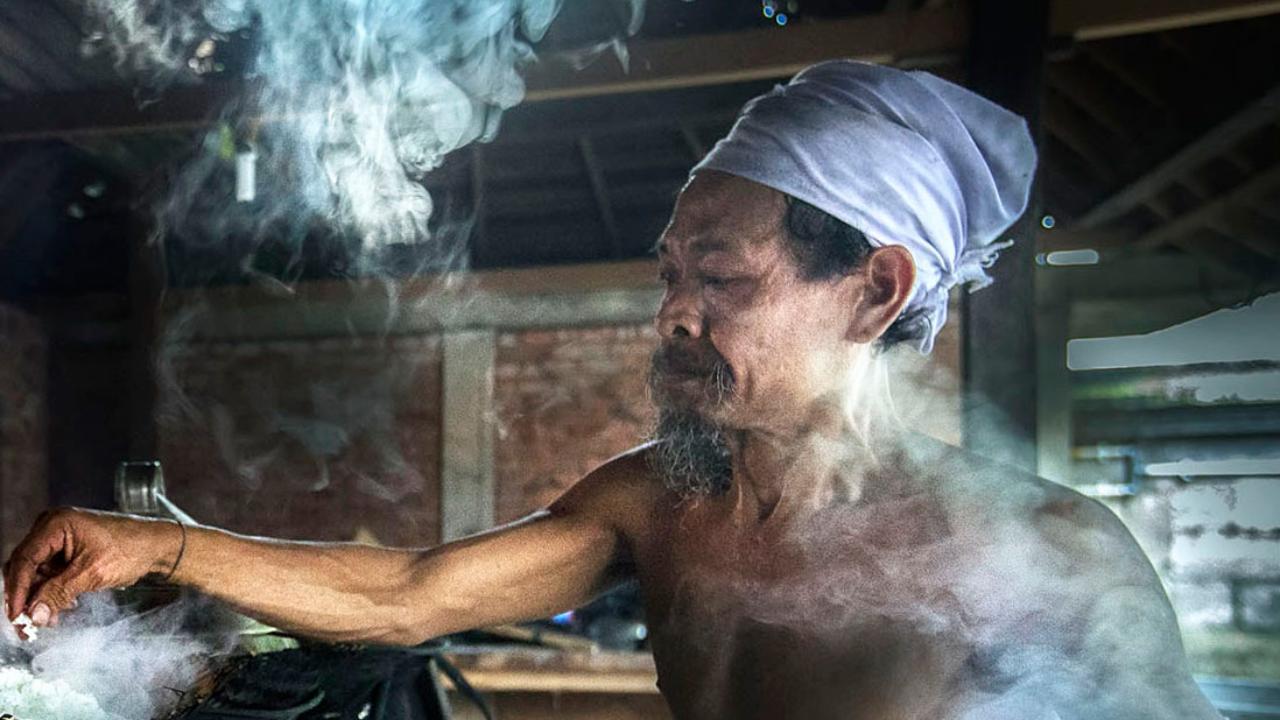
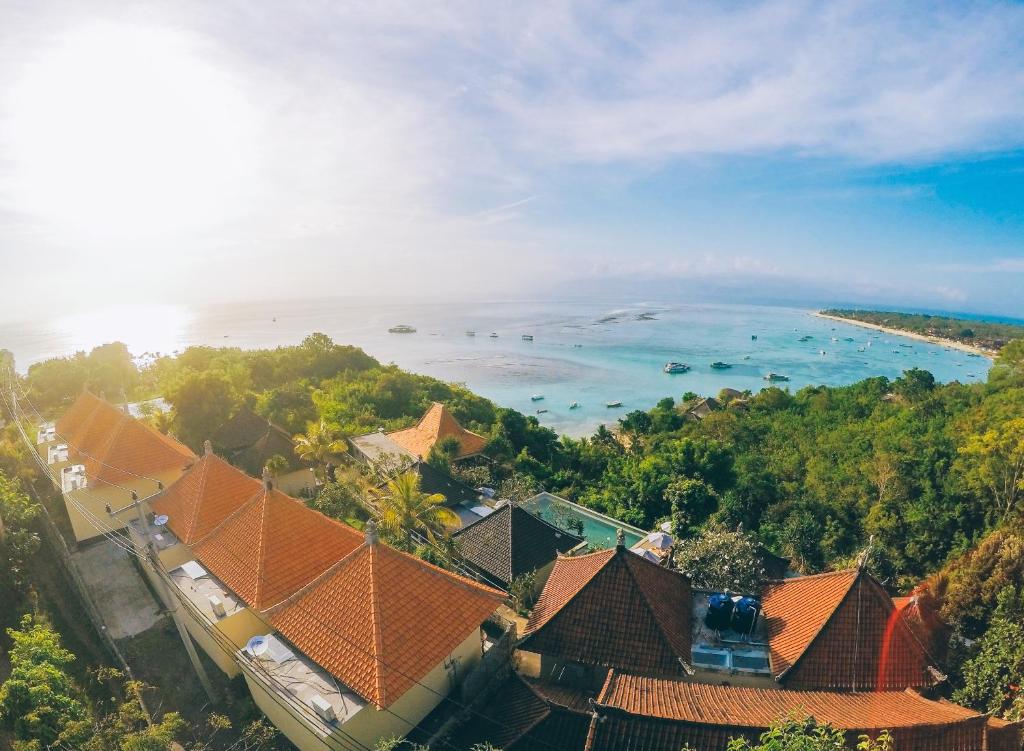
The daily routine of the Semawang Fishermen follows the tides and seasons rather than a fixed schedule. In the early morning, before the promenade fills with walkers, the Semawang Fishermen are already at work: checking nets, sorting catch, and returning jukung to the beach. This early morning rhythm is one of the most authentic scenes in Sanur — a glimpse of community life that predates tourism by centuries.
Semawang Fishermen: Keepers of Sanur’s Maritime Tradition
Semawang Fishermen have been integral to Sanur’s history, practicing fishing as a livelihood for generations. Using traditional boats called jukung and basic fishing tools, they work the rich Indonesian seas, abundant with fish, coral reefs, seaweed, and mangroves. Indonesia, one of the world’s largest fish producers, reflects this heritage, with Sanur’s fishing culture deeply tied to its community. The fishermen’s daily activity depends on weather and the ideal fishing season, showcasing a balance of tradition and nature’s rhythms.

As Sanur has become busy with tourism activities including fast boat travel, boat tours, jet skis, traditional fishing is no longer a first choice. Traditional fishermen have to keep up with change and so they find themselves adding necessary modern equipment to their jukung. Now, these fishermen no longer need to depend on the tides and wind direction to carry their jukung, because these jukung and boats are now
equipped with engines to make it easier to go out every day. They can easily go to the South of Lembongan Island in the hope of getting higher value fish like grouper, big mackerel, tuna, snapper, and pomfret.
The increase in petrol prices in September 2022 caused concern for everyone including the fishermen because it automatically caused operational costs to swell by 30%. Per fishing trip, fishermen need at least Rp. 500K just to cover the overhead costs. Combined with the fact that fish prices in the market tend to be unstable, fishermen are required to do calculations, planning and forecasting more accurately. If their weather prediction, choice of fishing location, or fishing time is wrong, they can go home with very little in hand or close to nothing.


Fisherman have one of the most challenging careers, as even the FAO (Food and Agriculture Organization) describe commercial fishing activity in general as dirty, dangerous and difficult work. Upon first impressions, fishing can seem like a fun way to work. All you have to do is hook some bait onto your line, throw it into the water, and wait for a fish to bite. Or, throw your net into the water and pull tons of fish. In reality, it is not that simple. Being good at fishing takes research, practice, and hard work. Patience is another virtue fishermen must possess when often all they can do is just wait for fish to bite. Determination in sticking with the plan and not giving up when fish are not biting is another quality fishermen have, sometimes they come out from the water with nothing. But, other times they can catch that one special trophy fish, whether by skill or just by pure luck.
Nowadays, we don’t see too many young fishermen in Sanur. The older generation see the younger generation does not want to do dirty, dangerous, and difficult work, including spending hours in the sun. While some of the younger generation follow into the family business, many are choosing to study at university or go into the ever-growing tourism industry. We learnt so much about life in Sanur village, fishing and the environment when we interviewed the local fishermen, they may not have studied marine science but there wouldn’t be too much they don’t know. We recommend stopping to chat with them the next you are down the beach, check out the daily catch, ask them about their life on the water – guaranteed you will hear some incredible stories about the one that got away… and the one that didn’t! The Semawang Fishermen carry a tradition that has shaped Semawang Beach for generations and continues to define the authentic character of this stretch of coastline. Learn more about Sanur on Wikipedia and explore our guide to Sanur.
The relationship between the Semawang Fishermen and their environment is one of the most instructive examples of sustainable resource management on the island — not because it follows any formal conservation framework, but because it is governed by the kind of deep ecological knowledge that only comes from generations of close observation. The Semawang Fishermen know where the fish move at different times of year, how the reef responds to seasonal changes in current and temperature, and which methods produce a sustainable yield without depleting the stock. This knowledge is not written down; it is passed from father to son, from older fisherman to younger, in the way that all genuinely useful knowledge travels — through practice, observation, and time spent on the water together.
The economic position of the Semawang Fishermen within Sanur’s broader economy has shifted considerably over the decades as tourism has transformed the village. Some fishermen have moved into boat transport, taking tourists to Nusa Lembongan and Nusa Penida rather than hauling nets. Others have found markets for their catch in Sanur’s restaurants, which prize locally caught fresh fish over the imported alternatives that dominate larger supermarket supply chains. The Semawang Fishermen who have maintained their traditional practice often describe it as both livelihood and identity — something that connects them to their ancestors and to the sea in a way that no alternative employment can replicate.
For visitors to Sanur who want to witness the Semawang Fishermen in their daily context, the best time is before sunrise or in the very early morning, when the jukung are being prepared for departure or returning with the night’s catch. Standing at the water’s edge at this hour, watching the fishermen work in the pre-dawn light with the reef visible just beneath the surface, provides one of the most unmediated encounters with Bali’s coastal working life that Sanur still offers. It is a scene worth rising early for.
The jukung — the traditional outrigger canoe used by the Semawang Fishermen — is one of the most elegant pieces of functional design in the Balinese maritime tradition. Narrow, fast, and stable despite its slender profile, the jukung is designed for the specific conditions of Bali’s reef-sheltered coastal waters. The Semawang Fishermen have used variations of this design for centuries, and the boats moored along Semawang Beach represent a direct continuation of that tradition. Unlike the fibreglass alternatives that have appeared on other parts of the Bali coastline, many of the jukung used by the Semawang Fishermen are still made from wood by local craftsmen, and the painting and decoration of each boat reflects the individual identity and spiritual practice of its owner.
The catch that the Semawang Fishermen bring in varies seasonally. Certain types of fish are more abundant at specific times of year, and the Semawang Fishermen adjust their methods and target species accordingly. During the months when the swell is too strong for safe passage over the outer reef, they focus on the inner lagoon species. During calmer periods, they venture further out to target the open-water fish that command higher prices at market. This seasonal rhythm is one of the things that has always governed the Semawang Fishermen’s relationship with the sea — an honest acknowledgement that the ocean sets the terms and the fishermen work within them.
There is a quiet dignity to the work of the Semawang Fishermen that visitors who spend any time watching them tend to notice. The work is physical, repetitive, and conducted in conditions that range from pleasant to genuinely difficult. But the Semawang Fishermen approach it without complaint or performance — simply as the work that needs to be done, in the way it has always been done, by people who were raised to do it. In an island that has experienced rapid and sometimes disorienting change over the past three decades, the continued presence of the Semawang Fishermen on their beach is a form of cultural continuity that Sanur is right to value and protect.
<< If you liked this article, you may also like our other articles >>
To chat with our marketing partner about your business, please contact The Travellist