var wpbm_global1 = {"wpbm_ajaxurl":"https://the-travellist.com/wp-admin/admin-ajax.php","wpbm_plugin_url":"https://the-travellist.com/wp-content/plugins/booking-manager","wpbm_today":"[2026,11,12,21,16]","wpbm_plugin_filename":"index.php","message_verif_requred":"This field is required","message_verif_requred_for_check_box":"This checkbox must be checked","message_verif_requred_for_radio_box":"At least one option must be selected","message_verif_emeil":"Incorrect email address","message_verif_same_emeil":"Your emails do not match","wpbm_active_locale":"en_US","wpbm_message_processing":"Processing","wpbm_message_deleting":"Deleting","wpbm_message_updating":"Updating","wpbm_message_saving":"Saving"};
//# sourceURL=wpbm-global-vars-js-extra
function loadScript(a){var b=document.getElementsByTagName("head")[0],c=document.createElement("script");c.type="text/javascript",c.src="https://tracker.metricool.com/resources/be.js",c.onreadystatechange=a,c.onload=a,b.appendChild(c)}loadScript(function(){beTracker.t({hash:"77d6b1dab2de87fade951e8435e57335"})});
One of the most enjoyable aspects of exploring Nusa Lembongan is the island’s compactness. The entire island can be circumnavigated by scooter in under an hour, which means that even a single full day gives you access to its main beaches, the mangrove boardwalk, the cliff views at Devil’s Tear, and a snorkelling session in Crystal Bay. For those who want more time, staying overnight transforms the experience entirely — the island empties of day-trippers in the late afternoon, and the evenings have a genuinely quiet, local character that is impossible to access on a day trip. Learn more about Nusa Lembongan on Wikipedia.
For those exploring Nusa Lembongan from Sanur, the fast boat services run regularly through the morning from the Sanur beach departure points. Book in advance during peak season and confirm return times before you leave. The boat ride itself, crossing open water with the Bali mainland behind you and the profile of Lembongan ahead, is part of the experience. Explore our full guide to Nusa Lembongan for detailed planning information.
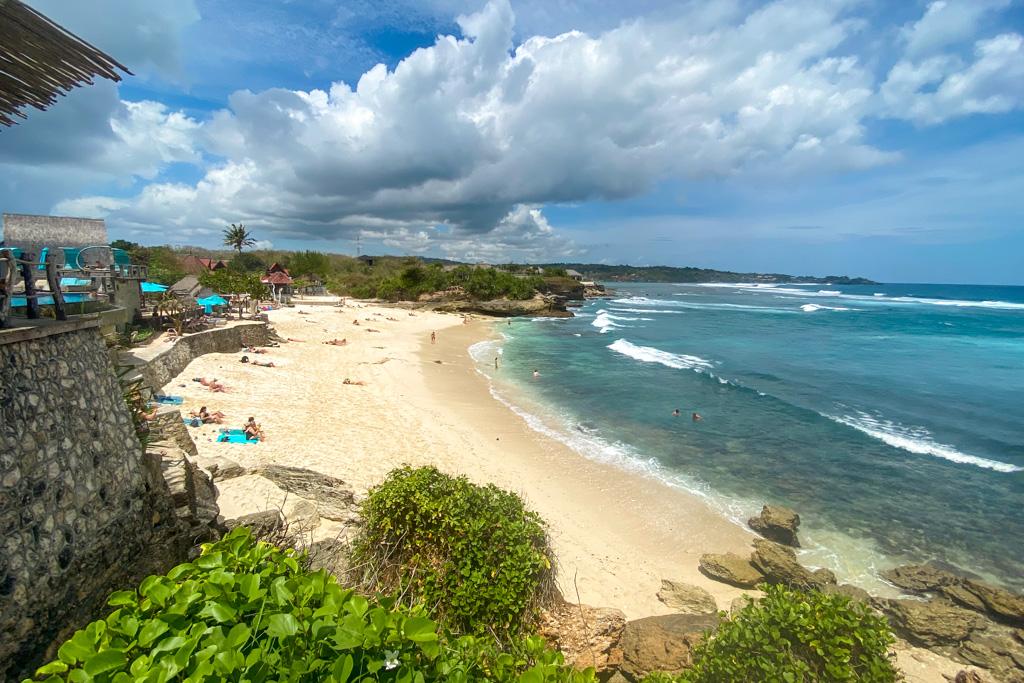
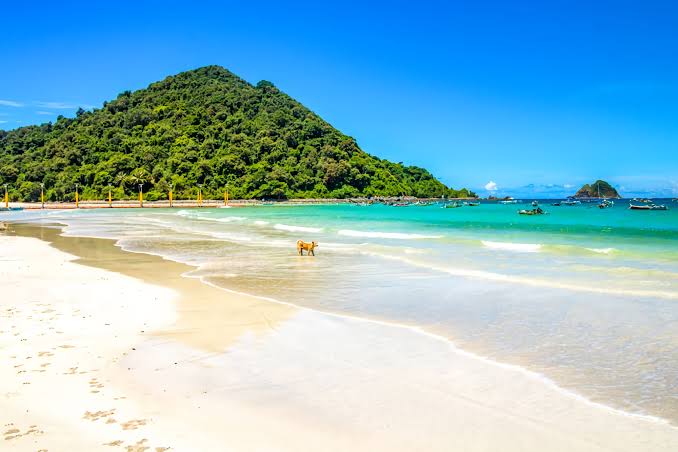
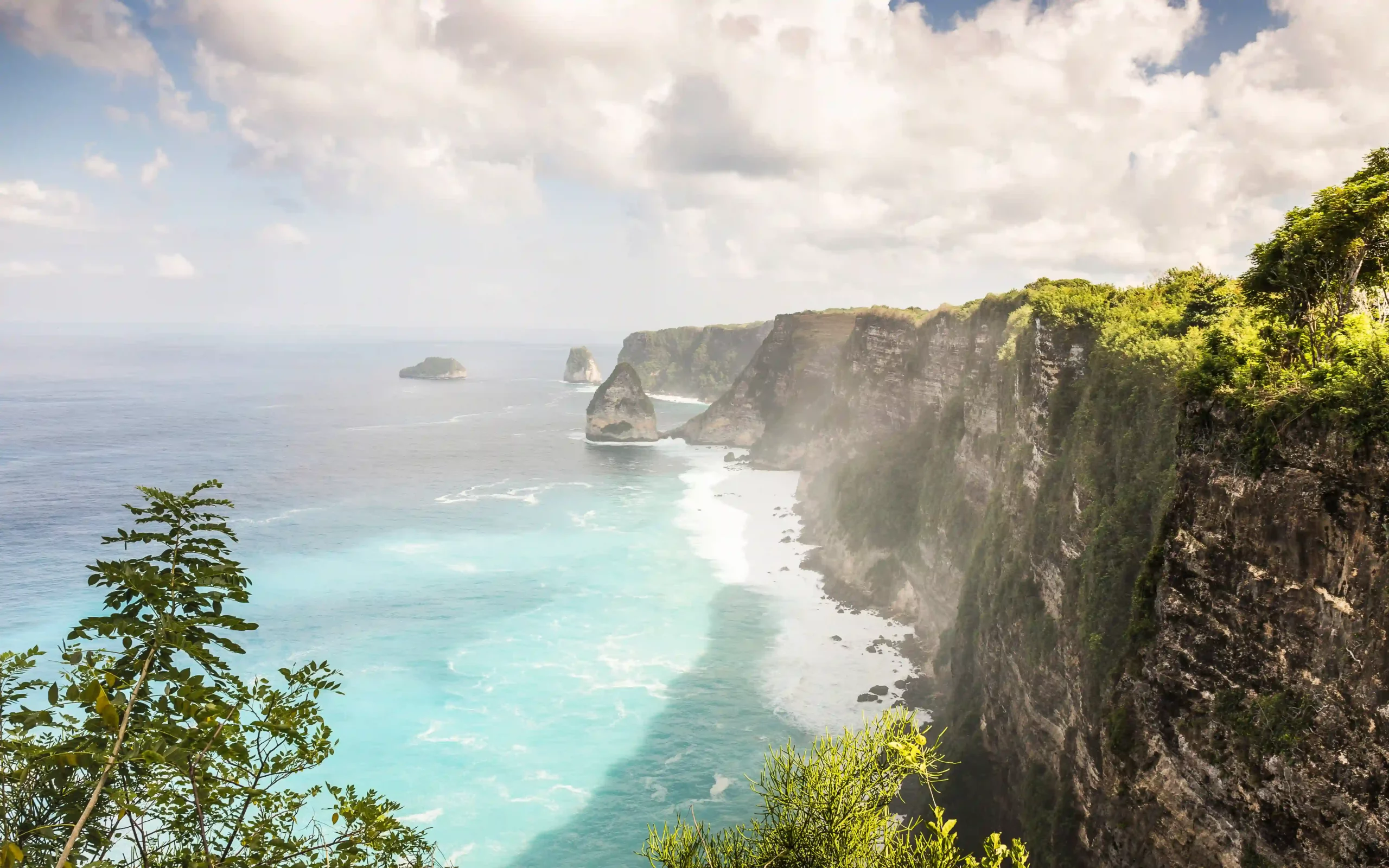
Exploring Nusa Lembongan is one of the most rewarding day trips or short stays from Sanur. Nusa Lembongan is just a short 30-minute boat ride from Sanur, means your days are spent on a white-sand, coral-fringed island paradise that visitors fall in love with year after year.
Docking at Jungut Batu, or Mushroom Bay, tourists are struck by the sheer brilliance and clarity of the water below. The healthy reef around the island teems with marine life, the perfect place to snorkel and explore the crystal-clear water, colourful coral and schools of curious fish. For divers, Lembongan is known for its world-class dive sites, with dives and diving instruction suited to beginner divers, all the way though to sites that only the very experienced should attempt.
If you can resist the pull of the water, your next stop should be the iconic Coconut Hut. The Coconut Hut is known for its incredible food, picture perfect cocktails, and the chance to play a hilarious game or two of mini-golf – it’s a favourite hangout on the island for good reason.
Lembongan is also known for its seaweed farming, and the vast seaweed farms that sprawl the island coastline. Visitors enjoy seeing the traditional method of farming seaweed, an important agricultural development in the 80s with many Lembongan families embracing it as seaweed became commercially viable. During the pandemic, seaweed farming again kept families going, however the reality of any agricultural work is that it is often back-breaking labour for little financial gain.
For that reason, many Lembongan locals are happy that tourist numbers are returning to the island. While seaweed farming and subsistence fishing will always be an important part of the Lembongan identity, local families also need the financial boost that tourism brings.
Tourism like this can hopefully be well managed, with minimal impact to the island ecosystem, while allowing Lembongan families to stay on the island for longer, preserving family and community for generations to come. Without tourist income, there is no doubt many would need to leave and look for work on the mainland.
The Lembongan locals are steadfast in their commitment to tradition. Nyepi Laut for example, is a day of silence for the ocean and islands. It is one day every year that the ocean around Lembongan is quiet and still, with no swimming, diving, snorkelling or boating allowed. Anything that doesn’t naturally exist in the water is forbidden from entering, out of respect for Dewa Baruna who is believed to rule the oceans. The Balinese believe that by observing this day of silence, balance is maintained between the people of the island, and their environment, and breaking this day of reverence will lead to disaster and tragedy in the water.
With the right balance of tourism and tradition, Lembongan is sure to be a tourist favourite for many years to come. It’s a small but stunning tropical island, a mecca for divers, yoga lovers, the adventurous and those looking to just chill out with a cocktail on the most beautiful beaches in the world. To discover an island paradise, make sure that exploring Nusa Lembongan is on your Bali holiday list!
Exploring Nusa Lembongan also means engaging with an island that is navigating the tensions of rapid tourism growth with varying degrees of success. The western coast — Mushroom Bay and Jungut Batu — has developed quickly and now has a dense concentration of guesthouses, dive operators, and restaurants that caters well to visitors but has lost some of the quietness that made it appealing in the first place. The southeast and the interior remain considerably more peaceful. When exploring Nusa Lembongan, building in time away from the main strips consistently produces a more authentic and more relaxing experience.
The marine environment around Nusa Lembongan is one of the most compelling reasons to visit. The channel between Lembongan and Penida is known for manta ray sightings, particularly at the cleaning stations near Manta Point. Crystal Bay, on the north coast of Nusa Penida just across the water, is reachable by short boat trip and offers some of the most dramatic underwater scenery in the region. For those exploring Nusa Lembongan with snorkelling or diving as a priority, booking with a local operator on the island rather than arranging through a Bali-based company almost always produces better logistics and more current knowledge of conditions.
Finally, exploring Nusa Lembongan on foot is underrated. The village of Jungut Batu — the island’s main settlement — is small enough to walk entirely in under 30 minutes, and the lanes between the family compounds, the small temples, and the older guesthouses reveal a community life that the beachfront strip conceals. Combining a beach day with an hour of village walking gives a much fuller picture of what Nusa Lembongan actually is: not just a resort island, but a community with its own rhythms, its own ceremonies, and its own very particular relationship with the sea.
<< If you liked this article, you may also like our other articles >> To chat with our marketing partner about your business, please contact The Travellist
window.maspikGuardConfig = {"honeypot":true,"honeypotName":"full-name-maspik-hp","honeypotLabel":"Leave this field empty","advancedKey":true,"keyName":"maspik_spam_key","keyValue":"pUoDQrdRACqDR6uCLikaghWVQswqp9OuNEIKXYrWWBg8ZzxuVgpekzV0ikVD7NUo","atomicHpId":"maspik_atomic_hp","atomicKeyId":"maspik_atomic_sk","atomicSignalsId":"maspik_atomic_sg","signals":true,"signalsName":"maspik_signals","signalsVersion":1,"signalsProbes":false,"skipSelector":""};
//# sourceURL=maspik-guard-js-before
var elementorFrontendConfig = {"environmentMode":{"edit":false,"wpPreview":false,"isScriptDebug":false},"i18n":{"shareOnFacebook":"Share on Facebook","shareOnX":"Share on X","pinIt":"Pin it","download":"Download","downloadImage":"Download image","fullscreen":"Fullscreen","zoom":"Zoom","share":"Share","playVideo":"Play Video","previous":"Previous","next":"Next","close":"Close","a11yCarouselPrevSlideMessage":"Previous slide","a11yCarouselNextSlideMessage":"Next slide","a11yCarouselFirstSlideMessage":"This is the first slide","a11yCarouselLastSlideMessage":"This is the last slide","a11yCarouselPaginationBulletMessage":"Go to slide"},"is_rtl":false,"breakpoints":{"xs":0,"sm":480,"md":768,"lg":1025,"xl":1440,"xxl":1600},"responsive":{"breakpoints":{"mobile":{"label":"Mobile Portrait","value":767,"default_value":767,"direction":"max","is_enabled":true},"mobile_extra":{"label":"Mobile Landscape","value":880,"default_value":880,"direction":"max","is_enabled":false},"tablet":{"label":"Tablet Portrait","value":1024,"default_value":1024,"direction":"max","is_enabled":true},"tablet_extra":{"label":"Tablet Landscape","value":1200,"default_value":1200,"direction":"max","is_enabled":false},"laptop":{"label":"Laptop","value":1366,"default_value":1366,"direction":"max","is_enabled":false},"widescreen":{"label":"Widescreen","value":2400,"default_value":2400,"direction":"min","is_enabled":false}},"hasCustomBreakpoints":false},"version":"4.3.6","is_static":false,"experimentalFeatures":{"additional_custom_breakpoints":true,"container":true,"theme_builder_v2":true,"hello-theme-header-footer":true,"nested-elements":true,"import-export-customization":true,"e_pro_atomic_form":true,"e_pro_collection_loop":true},"urls":{"assets":"https:\/\/the-travellist.com\/wp-content\/plugins\/elementor\/assets\/","ajaxurl":"https:\/\/the-travellist.com\/wp-admin\/admin-ajax.php","uploadUrl":"https:\/\/the-travellist.com\/wp-content\/uploads"},"nonces":{"floatingButtonsClickTracking":"a3fbf5aa6f","atomicFormsSendForm":"37886a5580"},"swiperClass":"swiper","settings":{"page":[],"editorPreferences":[]},"kit":{"body_background_background":"classic","active_breakpoints":["viewport_mobile","viewport_tablet"],"global_image_lightbox":"yes","lightbox_enable_counter":"yes","lightbox_enable_fullscreen":"yes","lightbox_enable_zoom":"yes","lightbox_enable_share":"yes","lightbox_title_src":"title","lightbox_description_src":"description","hello_header_logo_type":"logo","hello_header_menu_layout":"horizontal","hello_footer_logo_type":"logo"},"post":{"id":3533,"title":"Exploring%20Nusa%20Lembongan%3A%20A%20Day%20Trip%20Guide%20from%20Sanur","excerpt":"Exploring Nusa Lembongan, which is just a short 30-minute boat ride from Sanur, means your days are spent on a white-sand, coral-fringed island paradise that visitors fall in love with year after year. ","featuredImage":"https:\/\/the-travellist.com\/wp-content\/uploads\/2023\/09\/Lembongan-post-pandemic-1024x768.jpg"}};
//# sourceURL=elementor-frontend-js-before
(function(){
"use strict";
function wpbc_init__head(){_wpbc.set_other_param( 'locale_active', 'en_US' ); _wpbc.set_other_param('time_gmt_arr', [2026,11,12,13,16] ); _wpbc.set_other_param('time_local_arr', [2026,11,12,21,16] ); _wpbc.set_other_param( 'today_arr', [2026,11,12,21,16] ); _wpbc.set_other_param( 'availability__unavailable_from_today', '0' ); _wpbc.set_other_param( 'url_plugin', 'https://the-travellist.com/wp-content/plugins/booking' ); _wpbc.set_other_param( 'this_page_booking_hash', '' ); _wpbc.set_other_param( 'calendars__on_this_page', [] ); _wpbc.set_other_param( 'calendars__first_day', '1' ); _wpbc.set_other_param( 'calendars__max_monthes_in_calendar', '2y' ); _wpbc.set_other_param( 'availability__week_days_unavailable', [999] ); _wpbc.set_other_param( 'calendars__days_select_mode', 'dynamic' ); _wpbc.set_other_param( 'calendars__fixed__days_num', 1 ); _wpbc.set_other_param( 'calendars__fixed__week_days__start', [-1] ); _wpbc.set_other_param( 'calendars__dynamic__days_min', 1 ); _wpbc.set_other_param( 'calendars__dynamic__days_max', 300 ); _wpbc.set_other_param( 'calendars__dynamic__days_specific', [] ); _wpbc.set_other_param( 'calendars__dynamic__week_days__start', [-1] ); _wpbc.set_other_param( 'calendars__days_selection__middle_days_opacity', '0.75' ); _wpbc.set_other_param( 'is_enabled_booking_recurrent_time', true ); _wpbc.set_other_param( 'is_allow_several_months_on_mobile', false ); _wpbc.set_other_param( 'is_enabled_change_over', false ); _wpbc.set_other_param( 'is_enabled_booking_timeslot_picker', true ); _wpbc.set_other_param( 'update', '12.0' ); _wpbc.set_other_param( 'version', 'biz_s' ); _wpbc.set_message( "message_check_no_selected_dates", "Please, select booking date(s) at Calendar." ); _wpbc.set_message( "message_range_selection_click_last_date", "Start date selected. Now click the last day of your booking to complete the date range." ); _wpbc.set_message( "message_range_selection_has_unavailable_dates", "The selected date range includes unavailable or already booked dates, so the selection was cleared. Please choose a range that contains only available dates." ); _wpbc.set_message( "message_dates_times_unavailable", "These dates and times in this calendar are already booked or unavailable." ); _wpbc.set_message( "message_choose_alternative_dates", "Please choose alternative date(s), times, or adjust the number of slots booked." ); _wpbc.set_message( "message_cannot_save_in_one_resource", "It is not possible to store this sequence of the dates into the one same resource." ); _wpbc.set_message( "message_check_required", "This field is required" ); _wpbc.set_message( "message_check_required_for_check_box", "This checkbox must be checked" ); _wpbc.set_message( "message_check_required_for_radio_box", "At least one option must be selected" ); _wpbc.set_message( "message_check_email", "Incorrect email address" ); _wpbc.set_message( "message_check_same_email", "Your emails do not match" ); _wpbc.set_message( "message_check_valid_date", "This field must be a valid date like {date_example}" ); _wpbc.set_message( "message_check_digits_only", "This field must contain only digits" ); _wpbc.set_message( "message_check_digits_count", "This field must contain {digits} digits" ); _wpbc.set_message( "message_error_start_time", "Start Time is invalid. The date or time may be booked, or already in the past! Please choose another date or time." ); _wpbc.set_message( "message_error_end_time", "End Time is invalid. The date or time may be booked, or already in the past. The End Time may also be earlier that the start time, if only 1 day was selected! Please choose another date or time." ); _wpbc.set_message( "message_error_range_time", "The time(s) may be booked, or already in the past!" ); _wpbc.set_message( "message_error_duration_time", "The time(s) may be booked, or already in the past!" ); _wpbc.set_message( "message_booking_saving", "Saving" ); _wpbc.set_message( "message_duplicate_booking_resource_on_page", "More than one calendar or booking form for Booking Resource ID {resource_id} is present on this page. A hidden copy still conflicts with the visible form and can prevent booking submission. The site administrator must keep only one calendar or form for this Booking Resource. After the page is corrected, reload it and try again." ); _wpbc.set_message( "message_booking_form_context_required", "This booking form is not connected to a valid calendar for Booking Resource ID {resource_id}. This can happen when the same Booking Resource is used more than once on the page, including in hidden content, or when the page cache is outdated. Reload the page and try again. If the problem continues, ask the site administrator to remove duplicate forms for this Booking Resource and clear the page cache." ); _wpbc.set_message( "message_booking_form_context_expired", "This booking form was generated by an older or cached version of the page for Booking Resource ID {resource_id}. Reload the page and try again. If the problem continues, ask the site administrator to clear the page cache and remove any duplicate calendar or form for this Booking Resource." ); _wpbc.set_message( "message_unexpected_server_response", "The server returned an unexpected response. Please reload the page and try again. If the problem continues, contact the website administrator." ); _wpbc.set_message( "message_http_conflict_cache_hint", "A cached or optimized version of this page may be outdated. Clear the browser cache and reload the page. Website administrators should also purge page, server, and CDN caches and regenerate minified or optimized files." ); _wpbc.set_message( "message_resource_selector_summary_label", "Booking Resource" ); _wpbc.set_message( "message_resource_selector_start_over", "Start over" ); _wpbc.set_message( "message_appointment_summary_label", "Your appointment" ); _wpbc.set_message( "message_appointment_start_over", "Start over" ); _wpbc.set_message( "message_captcha_incorrect", "The code you entered is incorrect" ); _wpbc.set_message( 'message_processing', "Processing" ); _wpbc.set_message( 'message_deleting', "Deleting" ); _wpbc.set_message( 'message_updating', "Updating" ); _wpbc.set_message( 'message_saving', "Saving" ); _wpbc.set_message( 'message_inline_preview_submission_disabled', "This is a request-local preview. Booking submission is disabled, and no booking will be created." ); _wpbc.set_message( 'message_error_check_in_out_time', "Error! Please reset your check-in\/check-out dates above." ); console.log( '== WPBC VARS 12.0 | 11.6.1 [biz_s] LOADED ==' );}
(function(){
if (window.__wpbc_boot_done__ === true) return;
var started = false;
function run_once(){
if (started || window.__wpbc_boot_done__ === true) return true;
started = true;
try { wpbc_init__head(); window.__wpbc_boot_done__ = true; }
catch(e){ started = false; try{console.error("WPBC init failed:", e);}catch(_){} }
return (window.__wpbc_boot_done__ === true);
}
function is_ready(){ return !!(window._wpbc && typeof window._wpbc.set_other_param === "function"); }
if ( is_ready() && run_once() ) return;
var waited = 0, max_ms = 10000, step = 50;
var timer = setInterval(function(){
if ( is_ready() && run_once() ) { clearInterval(timer); return; }
waited += step;
if ( waited >= max_ms ) {
clearInterval(timer);
// Switch to slow polling (1s) so we still init even without user interaction later.
var slow = setInterval(function(){ if ( is_ready() && run_once() ) clearInterval(slow); }, 1000);
try{console.warn("WPBC: _wpbc not detected within " + max_ms + "ms; using slow polling.");}catch(_){}
}
}, step);
var evs = ["wpbc-ready","wpbc:ready","wpbc_ready","wpbcReady"];
evs.forEach(function(name){
document.addEventListener(name, function onready(){ if (is_ready() && run_once()) document.removeEventListener(name, onready); });
});
if (document.readyState === "loading") {
document.addEventListener("DOMContentLoaded", function(){ if (is_ready()) run_once(); }, { once:true });
}
window.addEventListener("load", function(){ if (is_ready()) run_once(); }, { once:true });
window.addEventListener("pageshow", function(){ if (is_ready()) run_once(); }, { once:true });
document.addEventListener("visibilitychange", function(){ if (!document.hidden && is_ready()) run_once(); });
var ui = ["click","mousemove","touchstart","keydown","scroll"];
var ui_bailed = false;
function on_ui(){ if (ui_bailed) return; if (is_ready() && run_once()){ ui_bailed = true; ui.forEach(function(t){ document.removeEventListener(t, on_ui, true); }); } }
ui.forEach(function(t){ document.addEventListener(t, on_ui, true); });
})();
})();
//# sourceURL=wpbc_all-js-after
var wpbc_booking_appointment_config = {"ajax_url":"https://the-travellist.com/wp-admin/admin-ajax.php","action":"WPBC_AJX_BOOKING_APPOINTMENT_RESOLVE","validate_action":"WPBC_AJX_BOOKING_APPOINTMENT_VALIDATE_TIME","nonce":"6542b2f029","error":"The Appointment form could not be loaded. Please try again.","validation_error":"This Appointment time could not be verified. Please try again.","initialization_error":"The Appointment form could not be initialized. Please start over and try again.","duplicate_provider":"This Provider already has an open Appointment form on this page. Complete or restart that Appointment before opening another form for the same Provider.","service_found":"Service found.","services_found":"Services found.","provider_found":"Provider found.","providers_found":"Providers found."};
//# sourceURL=wpbc-booking-appointment-js-extra
var wpbc_booking_resource_selector_config = {"ajax_url":"https://the-travellist.com/wp-admin/admin-ajax.php","action":"WPBC_AJX_BOOKING_RESOURCE_SELECTOR_RESOLVE","nonce":"b99630fc82","error":"The booking form could not be loaded. Please try again.","initialization_error":"The booking form could not be initialized. Please start over and try again.","duplicate_resource":"This Booking Resource already has an open booking form on this page. Complete or restart that booking before opening another form for the same resource.","resource_found":"Booking Resource found.","resources_found":"Booking Resources found."};
//# sourceURL=wpbc-booking-resource-selector-js-extra