var wpbm_global1 = {"wpbm_ajaxurl":"https://the-travellist.com/wp-admin/admin-ajax.php","wpbm_plugin_url":"https://the-travellist.com/wp-content/plugins/booking-manager","wpbm_today":"[2026,11,12,19,23]","wpbm_plugin_filename":"index.php","message_verif_requred":"This field is required","message_verif_requred_for_check_box":"This checkbox must be checked","message_verif_requred_for_radio_box":"At least one option must be selected","message_verif_emeil":"Incorrect email address","message_verif_same_emeil":"Your emails do not match","wpbm_active_locale":"en_US","wpbm_message_processing":"Processing","wpbm_message_deleting":"Deleting","wpbm_message_updating":"Updating","wpbm_message_saving":"Saving"};
//# sourceURL=wpbm-global-vars-js-extra
function loadScript(a){var b=document.getElementsByTagName("head")[0],c=document.createElement("script");c.type="text/javascript",c.src="https://tracker.metricool.com/resources/be.js",c.onreadystatechange=a,c.onload=a,b.appendChild(c)}loadScript(function(){beTracker.t({hash:"77d6b1dab2de87fade951e8435e57335"})});
Purnama and Tilem — the full moon and new moon of the Balinese calendar — are among the most sacred observances on the island. Bali is an island deeply connected to the cycles of nature, and few celestial events hold as much spiritual significance as Purnama and Tilem. These two lunar phases are sacred times in the Balinese Hindu calendar, marked by offerings, prayers, and temple ceremonies. Whether you’re a visitor or a spiritual seeker, experiencing Purnama or Tilem in Bali offers a profound insight into the island’s deep-rooted traditions and connection to the divine.
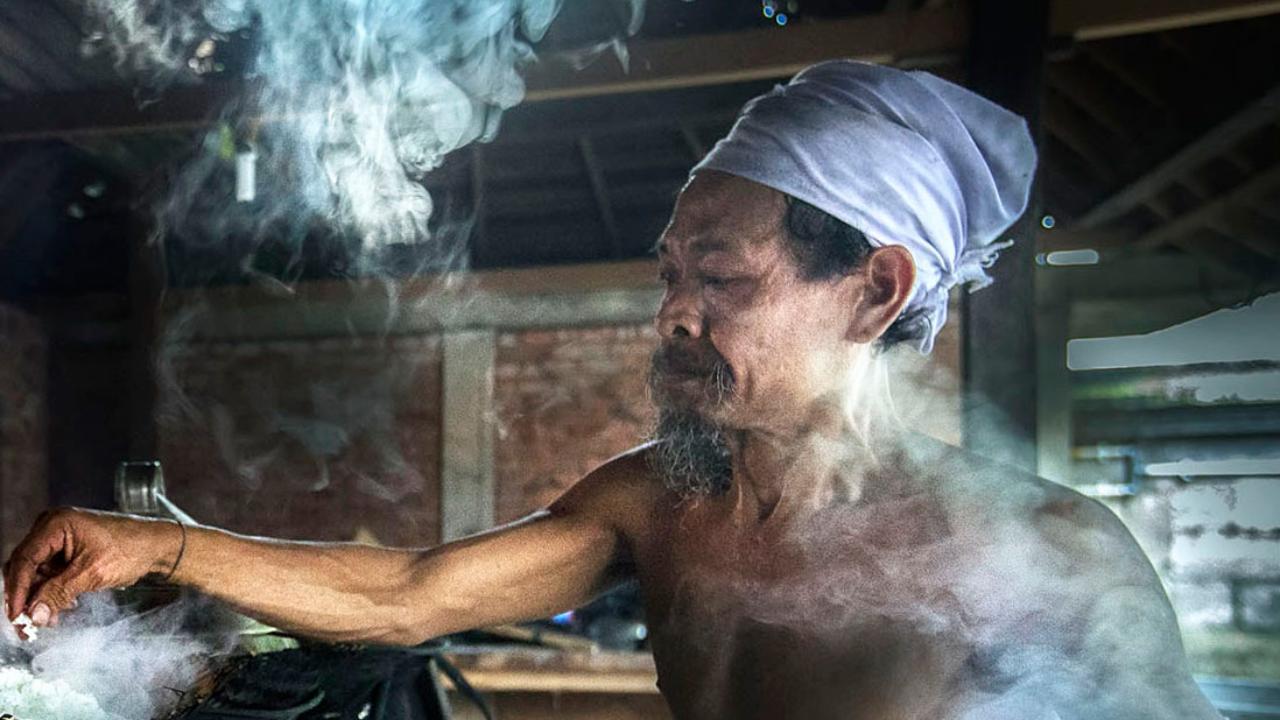
The rhythm of Purnama and Tilem shapes the entire Balinese ceremonial calendar. Major temple festivals are timed to coincide with Purnama; periods of cleansing and reflection fall around Tilem. This means that if you are in Bali during either phase, you will encounter ceremony without specifically seeking it. The visual experience alone — incense smoke rising over darkened temples at new moon, the sound of gamelan drifting across rice fields during the full moon — is worth the timing.
Understanding Purnama and Tilem means understanding something fundamental about how Balinese people experience time. The lunar calendar does not divide the year into equal units of productivity — it marks a continuous cycle of spiritual obligation, gratitude, and renewal. Visitors who arrive in Bali with some awareness of this cycle find that it gives everything they observe a deeper coherence.
The Spiritual Significance of Purnama and Tilem
Purnama – The Full Moon’s Divine Blessing
Purnama, or the Full Moon, is considered a time of spiritual energy, enlightenment, and prosperity. It is believed that during this phase, divine beings descend to bless the earth, making it an auspicious time for prayers and rituals.
On Purnama nights, Balinese Hindus flock to temples adorned with canang sari (offerings), incense, and flowers. They pray for health, success, and protection, often accompanied by traditional gamelan music and dance performances. Some temples, such as Pura Tirta Empul in Tampaksiring, are especially popular for purification rituals during the Full Moon, as locals and visitors alike immerse themselves in the sacred waters.
Tilem – A Time for Reflection & Cleansing
Tilem, or the New Moon, represents a time for introspection, purification, and letting go of negativity. It is believed that darkness is strongest on this night, making it an important time to seek protection from negative forces through rituals and prayers.
During Tilem, Balinese families prepare offerings of gratitude and protection for their ancestors and deities. Many also perform melukat (spiritual cleansing) rituals, either in temples or at the sea. Temples like Goa Lawah (the Bat Cave Temple) and Pura Luhur Batukaru see large gatherings as devotees come to cleanse their minds and spirits in preparation for the new lunar cycle.
Respecting Local Traditions
If you’re experiencing Purnama or Tilem in Bali, here are a few important etiquette tips:
Wear Traditional Attire – If attending a temple ceremony, wear a sarong and sash. Some temples provide them for visitors.
Be Respectful – Remain silent during prayers, and do not disturb the rituals.
Do Not Step on Offerings – Be mindful when walking on the streets, as canang sari are placed everywhere.
Ask Before Taking Photos – Some rituals are sacred and may not allow photography. Always seek permission first.
Purnama and Tilem are not just celestial events in Bali—they are deeply spiritual moments that reflect the island’s profound connection to the cosmos. Whether you witness a temple ceremony, take part in a purification ritual, or simply soak in the mystical energy of the moonlit sky, embracing these lunar traditions offers a truly unique and sacred experience in Bali.
If you’re visiting Bali, try planning your stay around one of these powerful moon phases—you may just feel a deeper connection to the island’s spirit. To understand Purnama and Tilem in the wider context of Balinese ceremonies, explore our guide to Saraswati Day in Bali and learn more about Purnama on Wikipedia.
<< If you liked this article, you may also like our other articles >> To chat with our marketing partner about your business, please contact The Travellist
window.maspikGuardConfig = {"honeypot":true,"honeypotName":"full-name-maspik-hp","honeypotLabel":"Leave this field empty","advancedKey":true,"keyName":"maspik_spam_key","keyValue":"pUoDQrdRACqDR6uCLikaghWVQswqp9OuNEIKXYrWWBg8ZzxuVgpekzV0ikVD7NUo","atomicHpId":"maspik_atomic_hp","atomicKeyId":"maspik_atomic_sk","atomicSignalsId":"maspik_atomic_sg","signals":true,"signalsName":"maspik_signals","signalsVersion":1,"signalsProbes":false,"skipSelector":""};
//# sourceURL=maspik-guard-js-before
var elementorFrontendConfig = {"environmentMode":{"edit":false,"wpPreview":false,"isScriptDebug":false},"i18n":{"shareOnFacebook":"Share on Facebook","shareOnX":"Share on X","pinIt":"Pin it","download":"Download","downloadImage":"Download image","fullscreen":"Fullscreen","zoom":"Zoom","share":"Share","playVideo":"Play Video","previous":"Previous","next":"Next","close":"Close","a11yCarouselPrevSlideMessage":"Previous slide","a11yCarouselNextSlideMessage":"Next slide","a11yCarouselFirstSlideMessage":"This is the first slide","a11yCarouselLastSlideMessage":"This is the last slide","a11yCarouselPaginationBulletMessage":"Go to slide"},"is_rtl":false,"breakpoints":{"xs":0,"sm":480,"md":768,"lg":1025,"xl":1440,"xxl":1600},"responsive":{"breakpoints":{"mobile":{"label":"Mobile Portrait","value":767,"default_value":767,"direction":"max","is_enabled":true},"mobile_extra":{"label":"Mobile Landscape","value":880,"default_value":880,"direction":"max","is_enabled":false},"tablet":{"label":"Tablet Portrait","value":1024,"default_value":1024,"direction":"max","is_enabled":true},"tablet_extra":{"label":"Tablet Landscape","value":1200,"default_value":1200,"direction":"max","is_enabled":false},"laptop":{"label":"Laptop","value":1366,"default_value":1366,"direction":"max","is_enabled":false},"widescreen":{"label":"Widescreen","value":2400,"default_value":2400,"direction":"min","is_enabled":false}},"hasCustomBreakpoints":false},"version":"4.3.6","is_static":false,"experimentalFeatures":{"additional_custom_breakpoints":true,"container":true,"theme_builder_v2":true,"hello-theme-header-footer":true,"nested-elements":true,"import-export-customization":true,"e_pro_atomic_form":true,"e_pro_collection_loop":true},"urls":{"assets":"https:\/\/the-travellist.com\/wp-content\/plugins\/elementor\/assets\/","ajaxurl":"https:\/\/the-travellist.com\/wp-admin\/admin-ajax.php","uploadUrl":"https:\/\/the-travellist.com\/wp-content\/uploads"},"nonces":{"floatingButtonsClickTracking":"5ca7fd2e30","atomicFormsSendForm":"7fe643a1f3"},"swiperClass":"swiper","settings":{"page":[],"editorPreferences":[]},"kit":{"body_background_background":"classic","active_breakpoints":["viewport_mobile","viewport_tablet"],"global_image_lightbox":"yes","lightbox_enable_counter":"yes","lightbox_enable_fullscreen":"yes","lightbox_enable_zoom":"yes","lightbox_enable_share":"yes","lightbox_title_src":"title","lightbox_description_src":"description","hello_header_logo_type":"logo","hello_header_menu_layout":"horizontal","hello_footer_logo_type":"logo"},"post":{"id":8004,"title":"Purnama%20and%20Tilem%3A%20Bali%20Sacred%20Lunar%20Rituals%20Explained","excerpt":"Bali is an island deeply connected to the cycles of nature, and few celestial events hold as much spiritual significance as Purnama and Tilem","featuredImage":"https:\/\/the-travellist.com\/wp-content\/uploads\/Makna-Hari-Purnama-dan-Tilem-dalam-Hindu_233698.jpg"}};
//# sourceURL=elementor-frontend-js-before
(function(){
"use strict";
function wpbc_init__head(){_wpbc.set_other_param( 'locale_active', 'en_US' ); _wpbc.set_other_param('time_gmt_arr', [2026,11,12,11,23] ); _wpbc.set_other_param('time_local_arr', [2026,11,12,19,23] ); _wpbc.set_other_param( 'today_arr', [2026,11,12,19,23] ); _wpbc.set_other_param( 'availability__unavailable_from_today', '0' ); _wpbc.set_other_param( 'url_plugin', 'https://the-travellist.com/wp-content/plugins/booking' ); _wpbc.set_other_param( 'this_page_booking_hash', '' ); _wpbc.set_other_param( 'calendars__on_this_page', [] ); _wpbc.set_other_param( 'calendars__first_day', '1' ); _wpbc.set_other_param( 'calendars__max_monthes_in_calendar', '2y' ); _wpbc.set_other_param( 'availability__week_days_unavailable', [999] ); _wpbc.set_other_param( 'calendars__days_select_mode', 'dynamic' ); _wpbc.set_other_param( 'calendars__fixed__days_num', 1 ); _wpbc.set_other_param( 'calendars__fixed__week_days__start', [-1] ); _wpbc.set_other_param( 'calendars__dynamic__days_min', 1 ); _wpbc.set_other_param( 'calendars__dynamic__days_max', 300 ); _wpbc.set_other_param( 'calendars__dynamic__days_specific', [] ); _wpbc.set_other_param( 'calendars__dynamic__week_days__start', [-1] ); _wpbc.set_other_param( 'calendars__days_selection__middle_days_opacity', '0.75' ); _wpbc.set_other_param( 'is_enabled_booking_recurrent_time', true ); _wpbc.set_other_param( 'is_allow_several_months_on_mobile', false ); _wpbc.set_other_param( 'is_enabled_change_over', false ); _wpbc.set_other_param( 'is_enabled_booking_timeslot_picker', true ); _wpbc.set_other_param( 'update', '12.0' ); _wpbc.set_other_param( 'version', 'biz_s' ); _wpbc.set_message( "message_check_no_selected_dates", "Please, select booking date(s) at Calendar." ); _wpbc.set_message( "message_range_selection_click_last_date", "Start date selected. Now click the last day of your booking to complete the date range." ); _wpbc.set_message( "message_range_selection_has_unavailable_dates", "The selected date range includes unavailable or already booked dates, so the selection was cleared. Please choose a range that contains only available dates." ); _wpbc.set_message( "message_dates_times_unavailable", "These dates and times in this calendar are already booked or unavailable." ); _wpbc.set_message( "message_choose_alternative_dates", "Please choose alternative date(s), times, or adjust the number of slots booked." ); _wpbc.set_message( "message_cannot_save_in_one_resource", "It is not possible to store this sequence of the dates into the one same resource." ); _wpbc.set_message( "message_check_required", "This field is required" ); _wpbc.set_message( "message_check_required_for_check_box", "This checkbox must be checked" ); _wpbc.set_message( "message_check_required_for_radio_box", "At least one option must be selected" ); _wpbc.set_message( "message_check_email", "Incorrect email address" ); _wpbc.set_message( "message_check_same_email", "Your emails do not match" ); _wpbc.set_message( "message_check_valid_date", "This field must be a valid date like {date_example}" ); _wpbc.set_message( "message_check_digits_only", "This field must contain only digits" ); _wpbc.set_message( "message_check_digits_count", "This field must contain {digits} digits" ); _wpbc.set_message( "message_error_start_time", "Start Time is invalid. The date or time may be booked, or already in the past! Please choose another date or time." ); _wpbc.set_message( "message_error_end_time", "End Time is invalid. The date or time may be booked, or already in the past. The End Time may also be earlier that the start time, if only 1 day was selected! Please choose another date or time." ); _wpbc.set_message( "message_error_range_time", "The time(s) may be booked, or already in the past!" ); _wpbc.set_message( "message_error_duration_time", "The time(s) may be booked, or already in the past!" ); _wpbc.set_message( "message_booking_saving", "Saving" ); _wpbc.set_message( "message_duplicate_booking_resource_on_page", "More than one calendar or booking form for Booking Resource ID {resource_id} is present on this page. A hidden copy still conflicts with the visible form and can prevent booking submission. The site administrator must keep only one calendar or form for this Booking Resource. After the page is corrected, reload it and try again." ); _wpbc.set_message( "message_booking_form_context_required", "This booking form is not connected to a valid calendar for Booking Resource ID {resource_id}. This can happen when the same Booking Resource is used more than once on the page, including in hidden content, or when the page cache is outdated. Reload the page and try again. If the problem continues, ask the site administrator to remove duplicate forms for this Booking Resource and clear the page cache." ); _wpbc.set_message( "message_booking_form_context_expired", "This booking form was generated by an older or cached version of the page for Booking Resource ID {resource_id}. Reload the page and try again. If the problem continues, ask the site administrator to clear the page cache and remove any duplicate calendar or form for this Booking Resource." ); _wpbc.set_message( "message_unexpected_server_response", "The server returned an unexpected response. Please reload the page and try again. If the problem continues, contact the website administrator." ); _wpbc.set_message( "message_http_conflict_cache_hint", "A cached or optimized version of this page may be outdated. Clear the browser cache and reload the page. Website administrators should also purge page, server, and CDN caches and regenerate minified or optimized files." ); _wpbc.set_message( "message_resource_selector_summary_label", "Booking Resource" ); _wpbc.set_message( "message_resource_selector_start_over", "Start over" ); _wpbc.set_message( "message_appointment_summary_label", "Your appointment" ); _wpbc.set_message( "message_appointment_start_over", "Start over" ); _wpbc.set_message( "message_captcha_incorrect", "The code you entered is incorrect" ); _wpbc.set_message( 'message_processing', "Processing" ); _wpbc.set_message( 'message_deleting', "Deleting" ); _wpbc.set_message( 'message_updating', "Updating" ); _wpbc.set_message( 'message_saving', "Saving" ); _wpbc.set_message( 'message_inline_preview_submission_disabled', "This is a request-local preview. Booking submission is disabled, and no booking will be created." ); _wpbc.set_message( 'message_error_check_in_out_time', "Error! Please reset your check-in\/check-out dates above." ); console.log( '== WPBC VARS 12.0 | 11.6.1 [biz_s] LOADED ==' );}
(function(){
if (window.__wpbc_boot_done__ === true) return;
var started = false;
function run_once(){
if (started || window.__wpbc_boot_done__ === true) return true;
started = true;
try { wpbc_init__head(); window.__wpbc_boot_done__ = true; }
catch(e){ started = false; try{console.error("WPBC init failed:", e);}catch(_){} }
return (window.__wpbc_boot_done__ === true);
}
function is_ready(){ return !!(window._wpbc && typeof window._wpbc.set_other_param === "function"); }
if ( is_ready() && run_once() ) return;
var waited = 0, max_ms = 10000, step = 50;
var timer = setInterval(function(){
if ( is_ready() && run_once() ) { clearInterval(timer); return; }
waited += step;
if ( waited >= max_ms ) {
clearInterval(timer);
// Switch to slow polling (1s) so we still init even without user interaction later.
var slow = setInterval(function(){ if ( is_ready() && run_once() ) clearInterval(slow); }, 1000);
try{console.warn("WPBC: _wpbc not detected within " + max_ms + "ms; using slow polling.");}catch(_){}
}
}, step);
var evs = ["wpbc-ready","wpbc:ready","wpbc_ready","wpbcReady"];
evs.forEach(function(name){
document.addEventListener(name, function onready(){ if (is_ready() && run_once()) document.removeEventListener(name, onready); });
});
if (document.readyState === "loading") {
document.addEventListener("DOMContentLoaded", function(){ if (is_ready()) run_once(); }, { once:true });
}
window.addEventListener("load", function(){ if (is_ready()) run_once(); }, { once:true });
window.addEventListener("pageshow", function(){ if (is_ready()) run_once(); }, { once:true });
document.addEventListener("visibilitychange", function(){ if (!document.hidden && is_ready()) run_once(); });
var ui = ["click","mousemove","touchstart","keydown","scroll"];
var ui_bailed = false;
function on_ui(){ if (ui_bailed) return; if (is_ready() && run_once()){ ui_bailed = true; ui.forEach(function(t){ document.removeEventListener(t, on_ui, true); }); } }
ui.forEach(function(t){ document.addEventListener(t, on_ui, true); });
})();
})();
//# sourceURL=wpbc_all-js-after
var wpbc_booking_appointment_config = {"ajax_url":"https://the-travellist.com/wp-admin/admin-ajax.php","action":"WPBC_AJX_BOOKING_APPOINTMENT_RESOLVE","validate_action":"WPBC_AJX_BOOKING_APPOINTMENT_VALIDATE_TIME","nonce":"349e017e77","error":"The Appointment form could not be loaded. Please try again.","validation_error":"This Appointment time could not be verified. Please try again.","initialization_error":"The Appointment form could not be initialized. Please start over and try again.","duplicate_provider":"This Provider already has an open Appointment form on this page. Complete or restart that Appointment before opening another form for the same Provider.","service_found":"Service found.","services_found":"Services found.","provider_found":"Provider found.","providers_found":"Providers found."};
//# sourceURL=wpbc-booking-appointment-js-extra
var wpbc_booking_resource_selector_config = {"ajax_url":"https://the-travellist.com/wp-admin/admin-ajax.php","action":"WPBC_AJX_BOOKING_RESOURCE_SELECTOR_RESOLVE","nonce":"4cf2cd180e","error":"The booking form could not be loaded. Please try again.","initialization_error":"The booking form could not be initialized. Please start over and try again.","duplicate_resource":"This Booking Resource already has an open booking form on this page. Complete or restart that booking before opening another form for the same resource.","resource_found":"Booking Resource found.","resources_found":"Booking Resources found."};
//# sourceURL=wpbc-booking-resource-selector-js-extra